Understanding the Design and Engineering of Cryogenic Tanks
The Backbone of Cryogenic Infrastructure
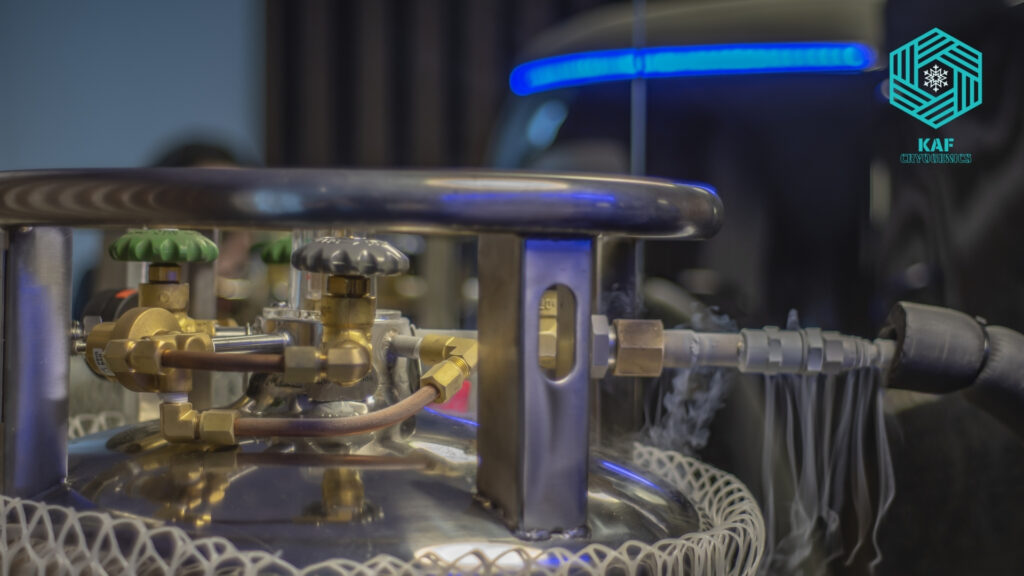
Cryogenic tanks are a fundamental component in the storage and transportation of liquefied gases such as nitrogen, oxygen, argon, hydrogen, and LNG. These tanks must withstand extremely low temperatures and maintain product purity while minimizing thermal losses. The design and engineering behind cryogenic tanks require precision, innovation, and a deep understanding of thermodynamics and materials science.
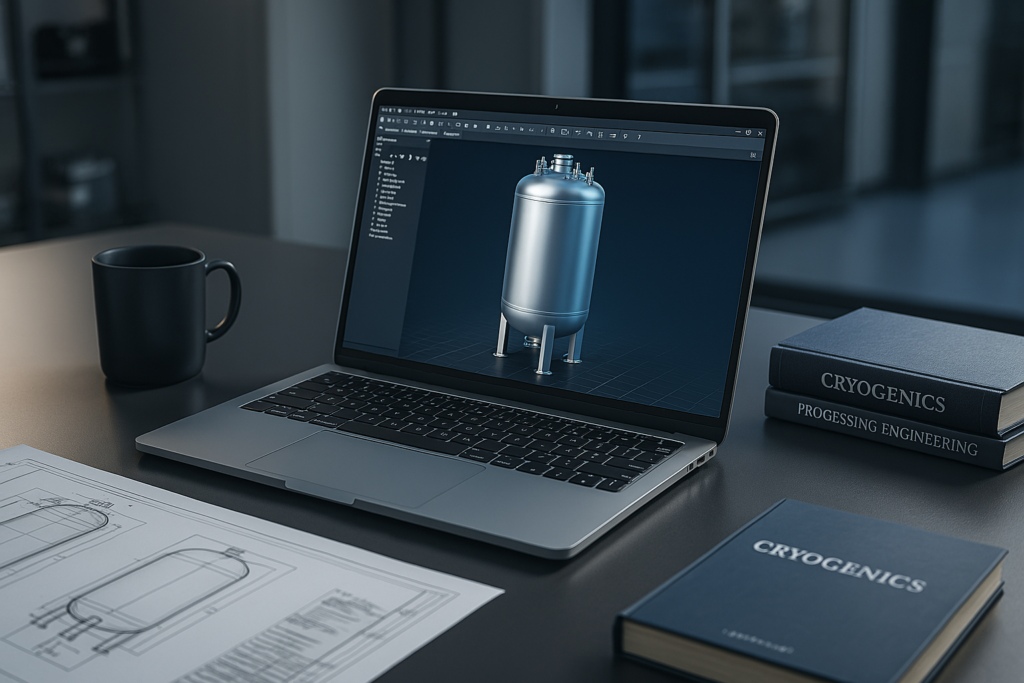
This article delves into the critical aspects of cryogenic tank design, including insulation techniques, materials selection, structural engineering, and safety systems—all essential for delivering high-performance storage and transport solutions. At KAF Cryogenics, we bring decades of expertise to engineering cryogenic tanks that meet the demanding needs of industries such as healthcare, energy, aerospace, and manufacturing.
Key Elements of Cryogenic Tank Design
Types of Cryogenic Tanks
Cryogenic tanks come in various forms depending on the application:
- Vertical stationary tanks: Ideal for industrial gas supply on-site
- Horizontal tanks: Used where space constraints require a low-profile design
- Mobile cryogenic tanks: For transport and mobile operations
- Microbulk tanks: Designed for small- to mid-scale applications
Each tank type is engineered to meet specific operational, logistical, and safety requirements.
Insulation Systems: Reducing Thermal Loss
One of the most critical features of cryogenic tanks is their insulation system. Preventing heat ingress is essential to reduce boil-off and maintain product integrity.
Common Insulation Methods:
- Vacuum insulation: The space between the inner and outer vessel is evacuated to prevent conduction and convection
- Multi-layer insulation (MLI): Thin reflective foils combined with spacer materials to reduce radiative heat transfer
- Perlite insulation: Often used in large tanks; perlite is a lightweight material that offers low thermal conductivity
Materials and Structural Considerations
Cryogenic tanks must be built using materials that can withstand extreme cold without becoming brittle.
Common Materials:
- Stainless steel: Offers durability, corrosion resistance, and strength at low temperatures
- Aluminum alloys: Lightweight and effective for mobile cryogenic systems
- Carbon steel (with proper treatment): Used for outer vessels in some cases
Pressure Control and Safety Systems
Maintaining internal pressure within safe limits is crucial for cryogenic tanks. These systems are equipped with various safety components:
- Pressure relief valves
- Bursting discs
- Vacuum monitoring sensors
- Automatic venting systems
These elements work together to ensure operational safety and prevent accidents during storage or transport.
Engineering for Performance and Compliance
Tank Design Standards and Certifications
To ensure quality and compliance, cryogenic tanks must adhere to international standards:
- ASME Section VIII: Design and construction of pressure vessels
- ISO 21009 & ISO 20421: Specific to cryogenic vessels
- CE Marking: For tanks used within the European Economic Area
- TPED/ADR: For transportable pressure equipment and road transport
Compliance with these standards ensures safety, interoperability, and market acceptance.
Finite Element Analysis (FEA) and Simulation
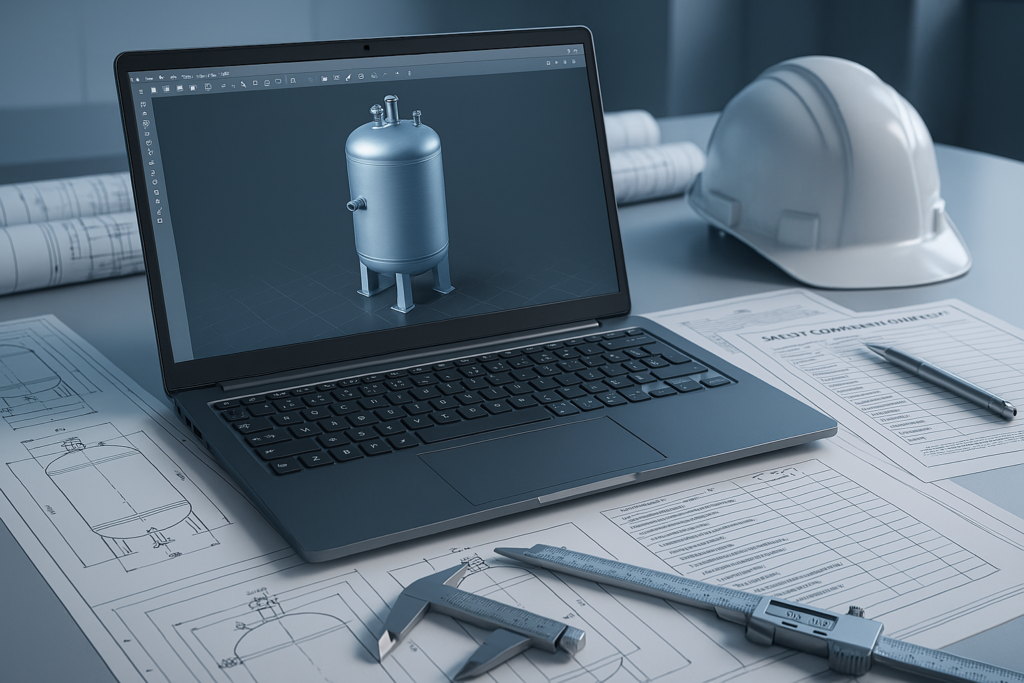
Modern cryogenic tank engineering uses tools like Finite Element Analysis (FEA) to simulate structural performance, thermal behavior, and pressure dynamics. This predictive modeling allows engineers to:
- Optimize wall thickness and weight
- Prevent mechanical failure
- Enhance overall efficiency
- Reduce production costs
Smart Integration with Digital Monitoring
Advanced cryogenic tanks are now designed with smart technology integration to offer real-time monitoring and predictive maintenance.
Digital Features:
- Temperature and pressure sensors
- Liquid level indicators
- Remote telemetry systems
- IoT connectivity for data analysis and reporting
These innovations reduce downtime and ensure consistent performance across the supply chain.
Applications Across Diverse Industries
Healthcare and Medical Gas Supply
Hospitals and research laboratories rely on cryogenic tanks for oxygen, nitrogen, and other medical-grade gases. Precision engineering ensures:
- Reliable supply during emergencies
- High-purity gas delivery
- Compact storage in urban facilities
Energy and Power Generation
Cryogenic LNG storage tanks are pivotal in the transition to cleaner fuels:
- Enable LNG storage for peak shaving and transport
- Facilitate hydrogen storage for emerging energy applications
Aerospace and Aviation
Cryogenic propellant tanks are mission-critical in aerospace:
- Fuel storage for rockets (LOX, LH2)
- Ground support equipment for launch sites
- Mobile refueling units for aircraft testing
Food and Beverage
Cryogenic tanks are used for:
- CO2 storage for carbonation
- Liquid nitrogen for flash freezing
- Maintaining cold chain logistics
KAF Cryogenics: Expertise in Cryogenic Engineering
At KAF Cryogenics, our engineering team designs and manufactures high-performance cryogenic tanks tailored to the unique needs of each client. We offer:
- Custom tank fabrication
- Integrated safety systems
- Industry-certified designs
- Ongoing technical support
From standard vertical tanks to complex modular systems, we deliver cryogenic solutions built for excellence.
Cold-Powered Innovation for a Demanding World
Cryogenic tanks are more than vessels—they are engineered systems that support critical operations across industries. As demands for efficiency, sustainability, and safety grow, so too does the importance of precision cryogenic engineering.
Partner with KAF Cryogenics for cutting-edge tank technology built to power the industries of tomorrow. Contact us today to learn more about our solutions and how we can help you meet your cryogenic storage needs.