
Understanding MAWP and Pressure Class Selection
What cryogenic tank MAWP means, how pressure class sets delivery pressure and boil-off management, and how to choose the right class for your process.
KAF Cryogenics7 min read
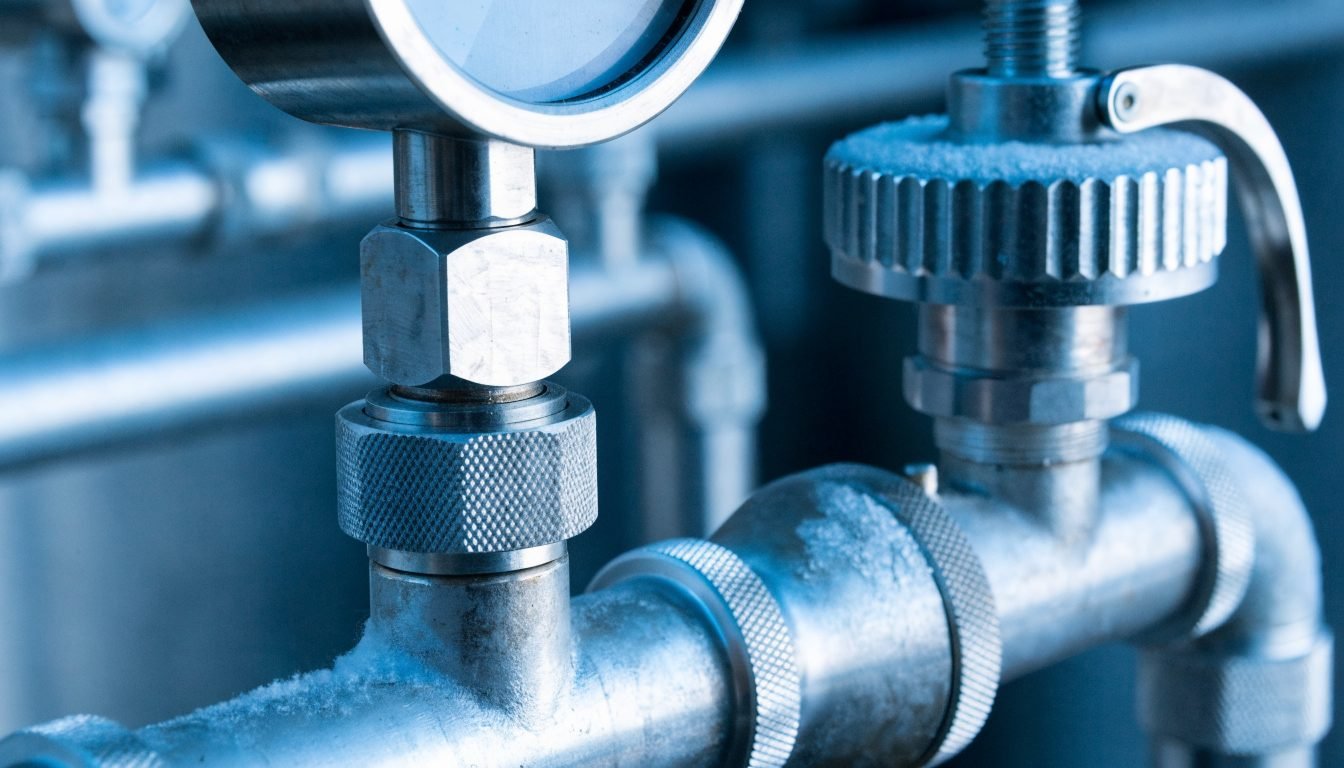
Cryogenic tank MAWP, the maximum allowable working pressure, is the highest pressure a tank is certified to operate at safely. It sets the pressure class of the vessel, which in turn decides the delivery pressure available to your process and how much margin the tank has to absorb boil-off before venting. Choosing it means matching the rating to your required delivery pressure with headroom.
Pick a class that is too low and the tank vents product often and struggles to hold the delivery pressure your equipment needs. Pick one far higher than the process requires and you pay for capability you never use. The right pressure class is the one that supplies your process reliably while giving the tank room to manage heat ingress.
This guide explains what MAWP is, how pressure class relates to delivery pressure and boil-off management, and how to select the class that fits your process without guesswork.
What does MAWP mean on a cryogenic tank?
MAWP stands for maximum allowable working pressure. It is the highest internal pressure the inner vessel is designed and certified to hold in normal service, verified by the code the tank is built to, such as PED 2014/68/EU or ASME Section VIII. The relief devices on the tank are set in relation to the MAWP so the vessel is protected if pressure ever climbs toward that limit.
MAWP is a design and safety ceiling, not the pressure the tank runs at day to day. Normal operating pressure sits below it. The gap between normal operating pressure and MAWP is the working margin that lets the tank absorb heat driven pressure rise without lifting a relief valve.
How is pressure class different from MAWP?
Pressure class is the practical grouping tanks are sold in, defined by their MAWP. A low pressure class tank has a lower MAWP and suits processes that need modest delivery pressure. A higher pressure class tank has a higher MAWP and can deliver gas at higher pressure and hold more margin against boil-off. When a buyer asks for a pressure class, they are really specifying the MAWP band the vessel must meet.
- MAWP is the certified maximum pressure of the specific vessel
- Pressure class is the commercial band that MAWP places the tank in
- A higher class means a higher MAWP and higher available delivery pressure
- The relief valve setting is tied to the MAWP, not to the operating pressure
How does pressure class set delivery pressure?
Your downstream equipment needs gas at a specific pressure. The tank has to supply that pressure at the point of use across your full flow range, including peaks. The tank's pressure class has to sit comfortably above the required delivery pressure, because pressure drops across piping, valves and the vaporizer between the tank and the process.
If the class is only marginally above the required delivery pressure, the tank can struggle to maintain output during a peak draw, when pressure naturally sags. Selecting a class with headroom above the delivery requirement keeps the gas flowing at spec when demand is highest.
The role of the pressure building circuit
Most cryogenic tanks include a pressure building circuit that vaporizes a small amount of liquid to raise and hold tank pressure. Its ability to keep up with a fast draw depends on having enough margin below the MAWP to work within. A well chosen pressure class gives that circuit room to maintain delivery pressure through peaks.
How does MAWP affect boil-off management?
A cryogenic tank absorbs a small amount of heat continuously, which evaporates liquid and raises internal pressure. Modern stationary tanks show static evaporation of roughly 0.2 to 0.6 percent per day depending on size and insulation. A higher MAWP gives the tank more headroom to hold that evaporated gas as pressure before a relief valve has to vent it to atmosphere.
That matters for product economics. A tank with generous margin between operating pressure and MAWP can ride out periods of low draw without venting, because rising pressure is absorbed rather than released. A tank running close to its MAWP vents sooner, losing product. For a fuller treatment, see our guide on holding time and normal evaporation rate.
What happens if the pressure class is too low or too high?
A class chosen below your real needs creates operating problems. A class chosen far above them wastes money. The goal is a rating matched to the process with sensible headroom, not the extremes.
- Too low: the tank cannot hold delivery pressure at peak and vents boil-off often
- Too low: relief valves lift more frequently, losing product and interrupting supply
- Too high: you pay for a heavier, more expensive vessel you do not use
- Matched with headroom: stable delivery pressure and fewer venting events
Because the correct class depends on your specific delivery pressure, flow profile and how long liquid sits between draws, it is a process decision rather than a default. Two plants using the same gas can need different pressure classes.
How does MAWP relate to codes and certification?
The MAWP is established and verified under the pressure vessel code the tank is certified to. PED 2014/68/EU is the European code that leads to CE marking, and ASME Section VIII is the United States code. The correct code depends on the destination market, not on quality, and both establish a valid, certified MAWP for the vessel.
Cryogenic service also requires that materials pass impact testing, the Charpy V-notch test, to avoid brittle fracture at low temperature below about minus 150 degrees Celsius. So the pressure rating is only valid alongside materials proven for cryogenic duty. To choose between codes, see our comparison of ASME versus PED certification.
How do I choose the right pressure class for my process?
Work from the process outward. Establish the delivery pressure your equipment needs, add margin for pressure losses to the point of use, and confirm the tank can hold that at peak flow. Then consider how long liquid will sit between draws, because longer idle periods favour more MAWP headroom to absorb boil-off without venting.
- Confirm the delivery pressure your downstream equipment requires
- Add headroom for pressure drop across piping, valves and the vaporizer
- Check the class holds delivery pressure at peak draw, not just at average
- Allow extra MAWP margin if liquid sits idle for long periods
- Confirm the certification code matches your destination market
This selection runs alongside volume sizing. The tank's capacity and its pressure class are chosen together, because both follow from the same demand and delivery picture.
How does KAF help you specify MAWP and pressure class?
KAF Cryogenics helps buyers translate delivery pressure and demand into an MAWP and pressure class, then supplies the tank certified to the code your market requires. New tanks are built to specification. Certified second-hand tanks are inspected, non-destructively tested, and vacuum and pressure tested, then sold with a document dossier and written warranty that confirms the certified MAWP.
KAF builds and sources to both PED 2014/68/EU and ASME, so the pressure rating comes with certification valid for your destination. Certified used units can ship from stock in weeks, while new fabrication typically takes months, and KAF accepts trade-in on new orders.
Frequently Asked Questions
What is MAWP on a cryogenic tank?
MAWP is the maximum allowable working pressure, the highest internal pressure the inner vessel is designed and certified to hold in normal service. It is a safety ceiling verified under the tank's pressure vessel code, and the relief devices are set in relation to it. The tank operates below the MAWP in day to day service.
What is the difference between MAWP and pressure class?
MAWP is the certified maximum pressure of a specific vessel. Pressure class is the commercial band that MAWP places the tank in. When a buyer specifies a pressure class, they are effectively specifying the MAWP the vessel must meet. A higher class means a higher MAWP and higher available delivery pressure.
How does pressure class affect delivery pressure?
The tank must supply gas at your required pressure across the full flow range, and pressure drops across piping, valves and the vaporizer on the way to the process. A pressure class chosen with headroom above the delivery requirement lets the tank hold output during peak draws, when pressure naturally sags.
Why does a higher MAWP help with boil-off?
A cryogenic tank continuously absorbs heat and evaporates a small amount of liquid, raising internal pressure. Modern stationary tanks show roughly 0.2 to 0.6 percent per day of static evaporation. A higher MAWP gives the tank more headroom to hold that evaporated gas as pressure before a relief valve vents it, reducing product loss during low draw periods.
Does the MAWP depend on ASME or PED certification?
The MAWP is established and verified under whichever code the tank is built to. PED 2014/68/EU leads to CE marking for Europe, and ASME Section VIII is the United States code. The correct one depends on the destination market, not on quality, and both establish a valid, certified MAWP for the vessel.
How do I choose the right pressure class?
Start from the delivery pressure your equipment needs, add margin for pressure losses to the point of use, and confirm the tank holds that at peak flow. Allow extra MAWP headroom if liquid sits idle for long periods so boil-off is absorbed rather than vented. Choose the class alongside the tank volume, since both follow from the same demand picture.
Related reading
Unsure which pressure class your process needs?
Share your delivery pressure, gas and flow profile. KAF Cryogenics will help you set the MAWP and pressure class, certified to the code your market requires, and quote new or certified used tanks.
Discuss your specification