
How to Size a Cryogenic Storage Tank for Your Plant
Cryogenic tank sizing by daily consumption, delivery frequency, autonomy days, peak demand and pressure. A clear buyer's method plus expert KAF help.
KAF Cryogenics8 min read
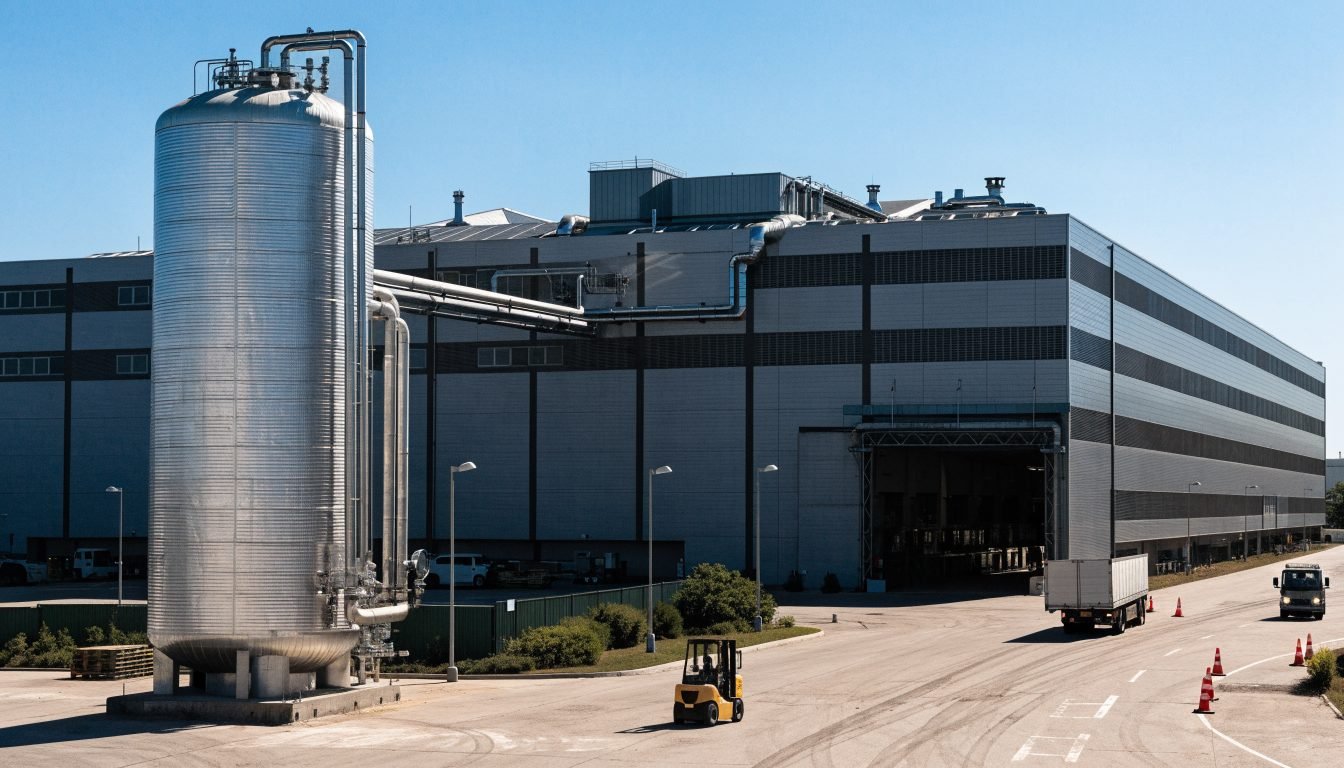
Cryogenic tank sizing starts with your daily gas consumption, then adds delivery frequency, autonomy days, peak demand and pressure needs. The correct volume holds enough liquid between deliveries to cover peaks and a safety reserve, so you never run dry and never overpay for capacity you cannot fill.
Get the volume wrong and the cost shows up either as emergency deliveries and production stops, or as a tank that is too large for the plot and rarely full. This guide walks through the sizing logic step by step for LIN, LOX, LAR, LNG, LCO2 and LPG service, using consumption and logistics rather than guesswork.
The method below is the same one KAF Cryogenics uses when helping a buyer match a tank to real demand. It stays vendor neutral so you can size confidently before you request a quote.
What does cryogenic tank sizing actually mean?
Cryogenic tank sizing means selecting the liquid volume and pressure rating that match your plant's gas demand and your delivery schedule. A cryogenic storage tank is a vacuum insulated vessel that holds liquefied gas at very low temperature. The usable volume you buy has to bridge the gap between one delivery and the next, cover the busiest days, and keep a reserve at the bottom.
Two numbers drive the answer. The first is how much gas you use, expressed as liquid volume per day. The second is how often a tanker can refill you. Everything else, from peak demand to pressure, adjusts the figure these two produce.
- Daily consumption, converted from gas volume to liquid volume for your specific gas
- Delivery interval, driven by your route and supplier logistics
- Autonomy, the number of days you want to run without a delivery
- Peak demand, the short bursts that exceed your average day
- Working pressure, which the process equipment downstream requires
How do I calculate my daily gas consumption?
Start with the gas volume your process consumes in a normal day at the point of use. Then convert that gas volume into liquid volume, because the tank stores liquid, not gas. Each cryogenic liquid has its own liquid to gas expansion ratio, so nitrogen, oxygen, argon, LNG and CO2 each convert differently. Your gas supplier or KAF can confirm the ratio for your product.
If your consumption varies by shift or by season, base the core figure on a representative working day, then handle the highs separately as peak demand. Do not average a busy week with idle weekends if the busy days set the pace of your deliveries.
Steady demand versus batch demand
A plant that draws gas continuously is easier to size than one that runs in batches. Batch processes create short, high draw events that empty a tank quickly even when the daily total looks modest. Note both the total per day and the shape of the demand across the day.
How do delivery frequency and autonomy days set the volume?
Once you know liquid consumption per day, multiply it by the number of days you want to operate between deliveries. That product is your working volume. Add a reserve so a late tanker does not stop production, and remember that a tank is never filled completely because ullage space is left for vapour.
- Frequent deliveries allow a smaller tank but raise logistics cost and dependence on the route
- Fewer deliveries need a larger tank but reduce delivery trips and interruptions
- Autonomy of several days protects against weather, holidays and supply disruption
- A bottom reserve keeps you above the level where pressure and flow become unreliable
Balancing tank size against delivery frequency is a cost trade, not a purely technical one. A remote site far from the fill point usually justifies more autonomy and a larger tank than a plant next door to a production facility.
Why does peak demand change the calculation?
Average consumption tells you how fast the tank empties over a week. Peak demand tells you whether the tank and its vaporizer can deliver enough gas during your busiest hour. A tank sized only on daily average can still fail if a peak draw pulls the pressure down faster than the tank can build it back.
Size the volume for the demand across the delivery cycle, but size the pressure building and vaporization capacity for the peak. If your peaks are sharp, you may need a higher pressure class or a larger vaporizer paired with the tank rather than simply a bigger vessel.
How does pressure affect tank selection?
The pressure your downstream equipment needs decides the tank's pressure class, and pressure class interacts with sizing. A higher delivery pressure changes how the tank builds and holds pressure, and it affects how boil-off is managed within the vessel. Match the tank's maximum allowable working pressure to the process, with headroom, rather than to the lowest rating available.
For a deeper look at this, our guide on understanding MAWP and pressure class selection explains how the rating is chosen and why it matters for delivery pressure and boil-off management.
Should boil-off and holding time factor into sizing?
Yes. A cryogenic tank continuously absorbs a small amount of heat, which evaporates a fraction of the liquid every day. For modern stationary cryogenic tanks this static evaporation is roughly 0.2 to 0.6 percent per day depending on size and insulation. Over a long autonomy period this loss is real inventory, so a low use site with a large tank should account for it.
Larger tanks tend to lose a smaller percentage per day than small ones because their surface area is lower relative to volume. If your consumption is low and delivery intervals are long, review holding time and normal evaporation rate before locking in the volume so the tank does not vent product you paid for.
What does a worked sizing example look like?
Consider the reasoning without fixed numbers. A distributor knows a customer's process gas demand per shift. They convert that gas demand to liquid volume using the expansion ratio for the gas. They multiply the daily liquid figure by the target autonomy in days to get working volume, then add a reserve and ullage allowance. They check the peak shift against the tank and vaporizer capacity, confirm the pressure class matches the process, and account for daily boil-off across the delivery cycle.
- Convert daily gas demand to daily liquid volume for the specific gas
- Multiply by autonomy days to get working volume
- Add a bottom reserve and vapour ullage allowance
- Verify peak demand against pressure build and vaporizer capacity
- Confirm pressure class matches downstream needs
- Account for daily boil-off across the delivery interval
The output is a target volume and pressure class. From there you decide vertical or horizontal orientation and whether a new build or a certified used tank from stock fits your timeline and budget.
How does KAF help you size and source the tank?
KAF Cryogenics helps buyers turn demand and logistics into a target volume and pressure class, then supplies the tank through two channels. New tanks are built to your specification. Certified second-hand tanks are units that have passed inspection, non-destructive testing, and vacuum and pressure testing, and are sold with a document dossier and a written warranty.
Because new fabrication typically takes months while certified used units can ship from stock in weeks, sizing early lets you choose the channel that fits your schedule. KAF also buys used equipment and accepts trade-in on new orders, which matters when your demand grows and you need to move up a size.
Frequently Asked Questions
How do I convert gas consumption to liquid volume for tank sizing?
Each cryogenic gas has a specific liquid to gas expansion ratio. You divide your daily gas demand by that ratio to get the equivalent liquid volume the tank must store. Nitrogen, oxygen, argon, LNG and CO2 each convert differently, so use the correct figure for your product. KAF can confirm the ratio for your gas.
How many days of autonomy should a cryogenic tank have?
Autonomy depends on how far you are from the fill point and how much risk of a late delivery you can accept. A site close to a production facility can run on frequent deliveries and a smaller tank. A remote site usually justifies several days of autonomy and a larger tank to absorb weather, holidays and supply disruption.
Does a bigger tank always cost more to run?
Not in every way. A larger tank needs fewer deliveries and loses a smaller percentage of its contents to boil-off each day because of its lower surface area relative to volume. The trade is higher upfront cost and more plot space against lower delivery frequency and better resilience. Sizing balances these against your demand.
Should I size for average demand or peak demand?
Both, for different reasons. Size the tank volume for demand across the delivery cycle so it does not empty too soon. Size the pressure building and vaporizer capacity for the peak hour so pressure and flow hold during your busiest draw. A sharp peak may call for a higher pressure class or a larger vaporizer rather than a bigger vessel.
How does boil-off affect a low use site?
Modern stationary cryogenic tanks lose roughly 0.2 to 0.6 percent of contents per day to static evaporation. On a low use site with long delivery intervals this loss becomes a meaningful share of throughput. Review holding time and normal evaporation rate before choosing a large volume so the tank does not vent product you paid for.
Can I get a certified used tank sized to my demand quickly?
Yes. KAF supplies certified second-hand tanks that have passed inspection, non-destructive testing, and vacuum and pressure testing, sold with a document dossier and written warranty. Because these can ship from stock in weeks rather than the months typical of new fabrication, sizing early lets you choose the faster channel when your timeline is tight.
Related reading
Not sure what volume your plant needs?
Send us your gas, daily consumption and delivery route. KAF Cryogenics will help you size the tank and pressure class, then quote new or certified used units available from stock.
Get a sizing consultation