
EN 13458 and EN 13530 Explained for Cryogenic Tank Buyers
EN 13458 covers static cryogenic vessels and EN 13530 covers transportable ones. See what each standard means for cryogenic tank buyers.
KAF Cryogenics6 min read
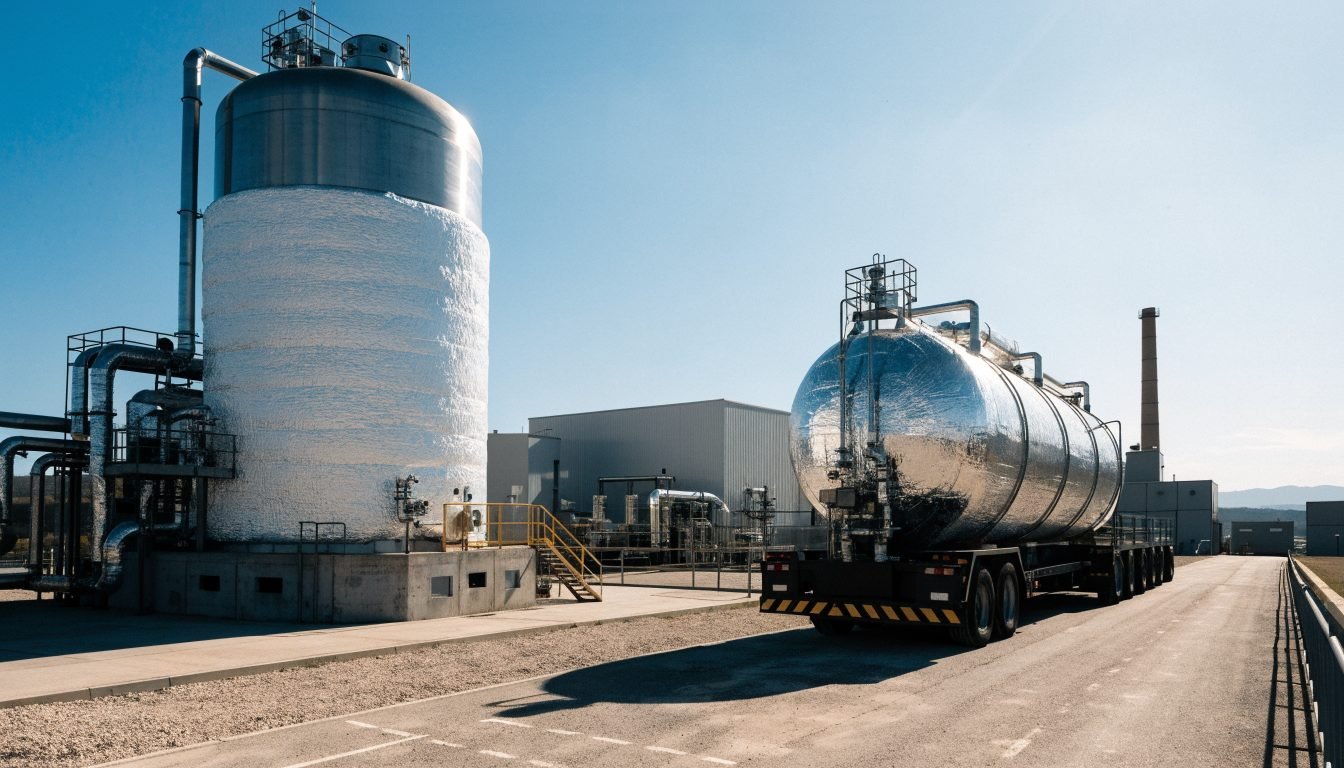
EN 13458 is the European standard for static vacuum-insulated cryogenic vessels, while EN 13530 covers transportable ones. In short, EN 13458 applies to tanks that stay in place at a site, and EN 13530 applies to tanks that move on the road. Both work alongside PED 2014/68/EU to show a cryogenic tank meets European requirements.
This guide explains what each standard covers, why the static versus transportable distinction matters for buyers, and how these standards relate to PED and ADR. The aim is a plain, accurate reference you can use when reading a tank's document file.
KAF Cryogenics manufactures and supplies cryogenic equipment built to these European standards, with the applicable standard recorded in the document dossier.
What is EN 13458?
EN 13458 is the European standard for static vacuum-insulated cryogenic vessels. Static means the vessel is installed and stays in one place, such as a storage tank at a plant, filling station, or customer site. Vacuum-insulated means the tank uses a vacuum space between an inner and outer shell to slow heat ingress and keep the cryogenic liquid cold.
For a buyer, seeing EN 13458 referenced in the document file confirms the tank was designed and built to the European standard intended for fixed cryogenic storage. It addresses the design, fabrication, and testing considerations specific to low-temperature, vacuum-insulated static equipment.
- Applies to static, fixed-in-place cryogenic vessels.
- Covers vacuum-insulated construction for low-temperature service.
- Relevant to LIN, LOX, LAR, LNG, and LCO2 storage tanks.
What is EN 13530?
EN 13530 is the European standard for transportable cryogenic vessels, meaning tanks designed to move rather than stay fixed. This covers mobile cryogenic equipment such as the vessels used on road tankers. Because a transportable vessel experiences the stresses of transport, its standard addresses requirements a static tank does not face in the same way.
If you are buying a cryogenic road tanker or a mobile vessel, EN 13530 is the standard you would expect to see referenced, in the same way EN 13458 applies to a fixed storage tank. The two standards divide the cryogenic world into equipment that stays put and equipment that moves.
Static vs transportable: which standard applies to your tank?
The simplest way to know which standard applies is to ask whether the vessel stays in place or travels. The distinction is not about quality; it reflects the different demands on fixed and mobile equipment.
- EN 13458 applies to static vessels: storage tanks fixed at a site.
- EN 13530 applies to transportable vessels: tanks that move on the road.
- A plant storage tank references EN 13458.
- A road tanker vessel references EN 13530.
When you review a document file, check that the referenced standard matches how the equipment will actually be used. A static tank should cite EN 13458, and a transportable vessel should cite EN 13530.
How do these standards relate to PED 2014/68/EU?
PED 2014/68/EU is the European Pressure Equipment Directive, the overarching regulation for placing pressure equipment on the European market, demonstrated through CE marking. EN 13458 and EN 13530 are the harmonized standards that address the specifics of cryogenic vessels within that framework.
In practice, PED sets the legal requirement, and the EN standards provide the technical route to meeting it for cryogenic equipment. Seeing both a PED reference and the relevant EN standard in the document file shows the tank fits the European framework. For a wider comparison of codes, see the ASME versus PED guide.
- PED 2014/68/EU: the directive and CE marking requirement.
- EN 13458: the harmonized standard for static cryogenic vessels.
- EN 13530: the harmonized standard for transportable cryogenic vessels.
How does EN 13530 relate to ADR for road tankers?
For cryogenic road tankers, EN 13530 addresses the vessel itself, while ADR governs the periodic inspection and dangerous goods transport rules that keep the unit road legal over time. A transportable vessel built to EN 13530 still needs a valid ADR inspection status to remain in service on the road.
For buyers of used road tankers, this means checking two things: the vessel standard and the ADR inspection date. The standard shows how the vessel was built; the ADR status shows it is currently cleared for transport. The ADR inspection process is covered in the ADR inspection guide.
Why do these standards matter when buying a cryogenic tank?
For a buyer, the referenced standard is part of the evidence that a tank is fit for its intended use. It sits in the document file alongside the manufacturing code and material test records. Asking for it protects you from ordering equipment that does not match your application or market.
- Confirms the vessel was built to the right European standard for its use.
- Helps match static or transportable equipment to your need.
- Supports European market acceptance alongside PED.
- Belongs in the document dossier with material and test records.
When buying certified second-hand equipment, the same standards apply. The unit should carry its EN standard reference in the dossier, as described in the certification process guide.
How does KAF apply EN 13458 and EN 13530?
KAF Cryogenics manufactures and supplies cryogenic equipment to the relevant European standards, EN 13458 for static vessels and EN 13530 for transportable ones, alongside PED 2014/68/EU and other certifications. The applicable standard is recorded in the document dossier that comes with the equipment.
Whether you need a fixed storage tank or a transportable vessel, new or certified second-hand, the standard reference lets you confirm the equipment matches your application and market. To see the full set of certifications, review the certifications overview.
Frequently Asked Questions
What does EN 13458 cover?
EN 13458 is the European standard for static vacuum-insulated cryogenic vessels, meaning tanks that stay fixed at a site such as storage tanks at a plant or filling station. It addresses the design, fabrication, and testing of low-temperature, vacuum-insulated static equipment.
What is the difference between EN 13458 and EN 13530?
EN 13458 applies to static cryogenic vessels that stay in place, while EN 13530 applies to transportable cryogenic vessels that move on the road. The distinction reflects the different demands on fixed and mobile equipment, not a difference in quality.
How do these standards relate to PED?
PED 2014/68/EU is the European directive for placing pressure equipment on the market, shown through CE marking. EN 13458 and EN 13530 are the harmonized standards that address cryogenic vessels within the PED framework. A document file typically references both.
Does a road tanker need EN 13530 and ADR?
Yes. EN 13530 addresses how the transportable vessel is built, while ADR governs the periodic inspection and transport rules that keep it road legal. When buying a used road tanker, check both the vessel standard and the current ADR inspection status.
Should I ask for the EN standard when buying used?
Yes. The referenced standard belongs in the document dossier alongside the manufacturing code and material test records. Confirming it helps ensure the used tank matches your application, static or transportable, and supports European market acceptance.
Which standard applies to an LNG storage tank?
A fixed LNG storage tank at a site references EN 13458, the standard for static cryogenic vessels. If the LNG vessel is transportable, such as on a road tanker, EN 13530 applies instead. The use determines which standard is relevant.
Related reading
Need cryogenic equipment built to European standards?
KAF Cryogenics supplies static and transportable cryogenic equipment to EN 13458, EN 13530, and PED 2014/68/EU, with the standard recorded in the dossier. Contact us for a quote.
Contact KAF