
ADR Inspection for Cryogenic Trailers: Intervals and Requirements
ADR inspection for cryogenic trailers: what it checks, the periodic and intermediate intervals, and why a valid ADR date matters when you buy used.
KAF Cryogenics7 min read
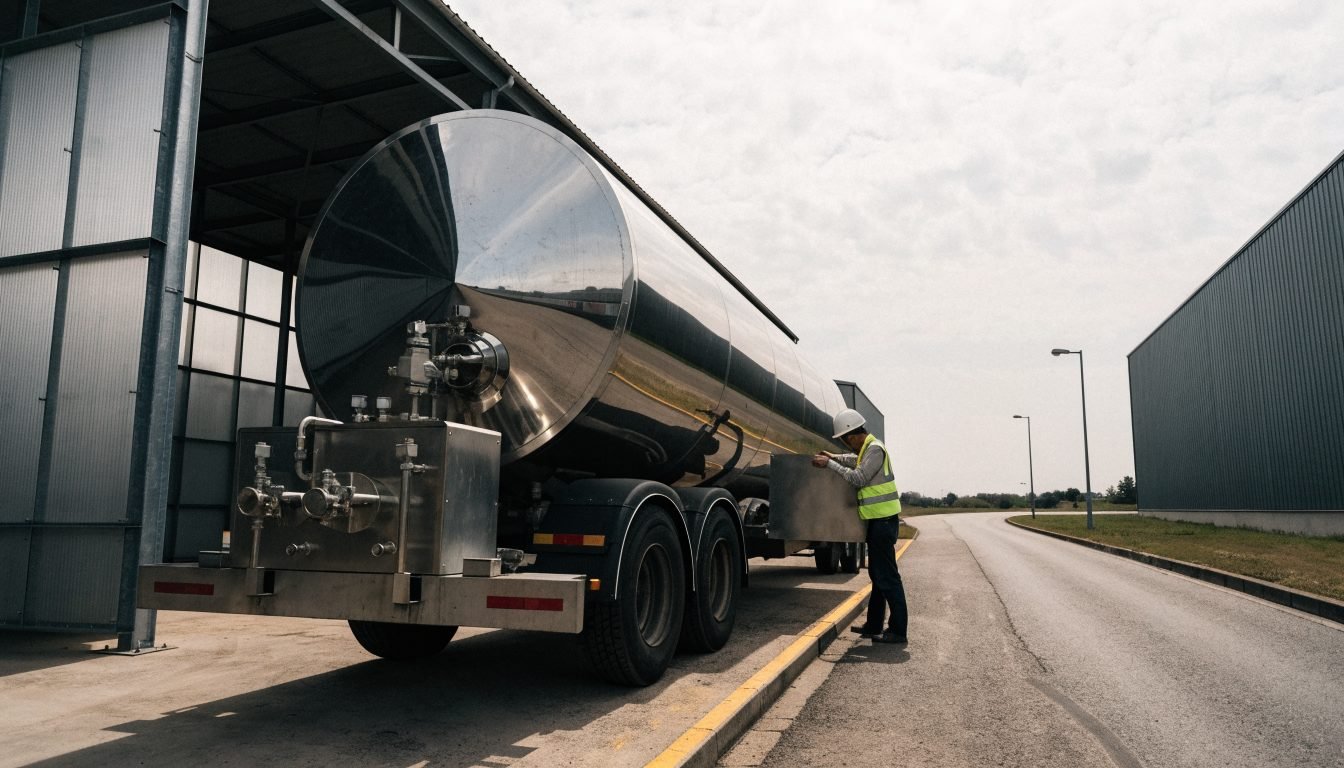
ADR inspection for cryogenic road tankers is the periodic examination required under the European agreement on carrying dangerous goods by road. It covers the tank shell, service equipment, safety devices, and leaktightness. For refrigerated liquefied gases, a periodic inspection is commonly applied on a six-year cycle, with an intermediate check between.
This guide explains what an ADR inspection checks on a cryogenic trailer, the typical interval structure, and why the next inspection date on the tank plate matters as much as the tank itself when you buy a used unit.
Intervals depend on the tank type and the competent authority, so always confirm the exact schedule against the current ADR edition and a notified inspection body.
What is ADR inspection for a cryogenic trailer?
ADR is the European agreement concerning the international carriage of dangerous goods by road. Cryogenic road tankers carry refrigerated liquefied gases such as liquid nitrogen, oxygen, argon, and LNG, which are regulated dangerous goods. ADR sets out how their tanks are built, approved, and periodically re-examined so they stay fit for service.
An ADR inspection is carried out by an inspection body recognised by the competent authority. It confirms that the tank, its safety equipment, and its documentation still meet the requirements the tank was approved to. The result is recorded, and the valid date is shown on the tank plate and in the tank record.
Cryogenic tankers are vacuum-insulated, with an inner vessel inside an outer jacket. That construction changes how some checks are performed, because the inner vessel cannot simply be opened and walked into like a single-wall tank.
What does an ADR inspection check on a cryogenic tanker?
The examination looks at both the pressure envelope and the equipment that keeps the load safe in transport. A typical scope includes the following.
- External condition of the outer jacket, supports, and the mounting to the chassis or trailer frame.
- The inner vessel and piping condition, assessed by the methods appropriate to a vacuum-insulated tank, including non-destructive testing (NDT) where required.
- Leaktightness of the tank and its closures.
- Safety relief devices, including relief valves and bursting discs, checked for correct set pressure and function.
- Service equipment: valves, fittings, hoses, pump, and vaporiser where fitted.
- The vacuum condition of the insulation jacket, since vacuum loss raises boil-off and pressure build.
- Marking, the tank plate, and the documentation file that proves approval and prior inspections.
The inspection body decides which tests apply based on the tank design and the interval. For vacuum-jacketed tanks, internal examination and hydraulic pressure testing are handled differently from single-wall tanks, because opening the vacuum space is not routine. Confirm the exact method with the inspection body.
How often is an ADR inspection required?
ADR uses a layered schedule rather than a single date. The main elements are an initial inspection before the tank enters service, periodic inspections through its life, and intermediate checks between the periodic ones.
- Initial inspection: carried out when the tank is first approved, before it is put into service.
- Periodic inspection: for tanks intended for refrigerated liquefied gases, a periodic inspection is commonly applied on a six-year cycle. This is the fuller examination.
- Intermediate inspection: a lighter check, including a leaktightness test, applied between periodic inspections.
- Exceptional inspection: required after significant repair, modification, or an event that could have affected the tank.
The exact intervals depend on the tank type, the substances carried, and the competent authority. Treat the six-year figure as the common cycle for refrigerated liquefied gas tanks, and verify the schedule that applies to a specific unit against the current ADR text and the inspection body.
Why does the ADR date matter when buying a used cryogenic trailer?
The next ADR inspection date sets when the trailer must go back for examination before it can legally carry dangerous goods. A unit with a date far in the future can be put to work sooner, while one near its expiry may need inspection and any resulting work before the first load.
For a buyer, the ADR date is part of the total cost and the timeline. A short remaining validity is not a reason to walk away, but it should be priced in and planned for. Ask for the current ADR certificate and the tank record, and read the next-due date before you agree a price.
This is one item on a broader used-trailer checklist. Vacuum condition, inner vessel and piping NDT, pump and vaporiser condition, and the certification file all matter alongside the ADR date. See our buyer checklist for used LNG semi-trailers for the full list.
What documents should come with an ADR-compliant tanker?
A cryogenic tanker that is ready for road service should arrive with a documentation file that lets an inspection body and an operator trace its approval and history. Ask for the following.
- The tank approval or type approval certificate.
- The current ADR inspection certificate with the next-due date.
- The tank record showing initial, periodic, and intermediate inspections.
- Manufacturing and material documentation, including evidence of impact (Charpy V-notch) testing for low-temperature service.
- Safety device records for relief valves and bursting discs.
- Any repair or modification records and the related exceptional inspection reports.
A complete file lowers risk and speeds up the next inspection. A missing file makes it harder to prove compliance and can delay putting the unit into service.
How does ADR relate to EN 13530 and PED?
These frameworks cover different stages of a tanker's life, and they work together rather than replacing each other.
- EN 13530 is the European standard for transportable vacuum-insulated cryogenic vessels. It governs how the mobile tank is designed and built.
- PED 2014/68/EU is the European pressure equipment directive that applies to the pressure design and CE marking of the equipment.
- ADR governs the carriage of the dangerous goods by road, including approval, marking, and the periodic inspection cycle described above.
In short, EN 13530 and PED sit on the build and pressure side, while ADR sits on the road-transport and periodic-inspection side. A used tanker offered for European road service should show consistency across all three. For the static equivalent, EN 13458 covers stationary vacuum-insulated cryogenic vessels.
How KAF handles ADR and inspection on used trailers
KAF Cryogenics supplies cryogenic and pressurised gas equipment through two channels: new units built to specification, and certified second-hand units. Used trailers offered by KAF pass inspection, NDT, and vacuum and pressure testing, and are sold with a document dossier and a written warranty.
Because ADR validity and the tank record are part of that dossier, a buyer can see the inspection status before committing. For units that need it, the periodic inspection cycle and the next-due date are made clear so the timeline is known up front.
KAF can deliver suitable units from stock in weeks, while new fabrication typically takes months. KAF also buys used equipment and accepts trade-in against new orders.
Frequently Asked Questions
How often does a cryogenic road tanker need an ADR inspection?
ADR applies a layered schedule of initial, periodic, and intermediate inspections. For tanks carrying refrigerated liquefied gases, a periodic inspection is commonly applied on a six-year cycle, with an intermediate check between. The exact interval depends on the tank and the competent authority, so confirm it against the current ADR edition.
Who can carry out an ADR inspection?
An inspection body recognised by the competent authority carries out the examination. The result is recorded in the tank record and shown on the tank plate with the valid date. Operators cannot self-certify the periodic inspection.
Does the vacuum jacket change how a cryogenic tank is inspected?
Yes. A vacuum-insulated tank has an inner vessel inside an outer jacket, so internal examination and hydraulic pressure testing are handled differently from single-wall tanks. The inspection body decides which methods apply, including NDT and vacuum checks, based on the design.
Can I buy a used cryogenic trailer with an expired ADR date?
You can buy it, but it must pass inspection before it can legally carry dangerous goods again. Price the inspection and any resulting work into the deal, and plan the timeline. Always read the next-due date on the ADR certificate before agreeing terms.
What is the difference between ADR and EN 13530?
EN 13530 is the European standard for how a transportable cryogenic vessel is designed and built. ADR governs the road transport of the dangerous goods it carries, including approval, marking, and the periodic inspection cycle. A road-ready tanker should be consistent across both.
What documents prove a tanker is ADR compliant?
Ask for the tank approval certificate, the current ADR inspection certificate with the next-due date, the tank record of prior inspections, material and manufacturing documentation, and safety device records. A complete file lowers risk and speeds the next inspection.
Related reading
Need a cryogenic trailer with a clear inspection status?
KAF Cryogenics supplies new and certified second-hand cryogenic trailers with a full document dossier, valid inspection records, and a written warranty. Tell us your route and volume and we will quote suitable units, many available from stock in weeks.
Request a quote