
How to Size an Ambient Air Vaporizer
Size an ambient air vaporizer by flow rate, gas type, ambient temperature, duty cycle and defrost. Series vs parallel and cold climate margin explained.
KAF Cryogenics7 min read
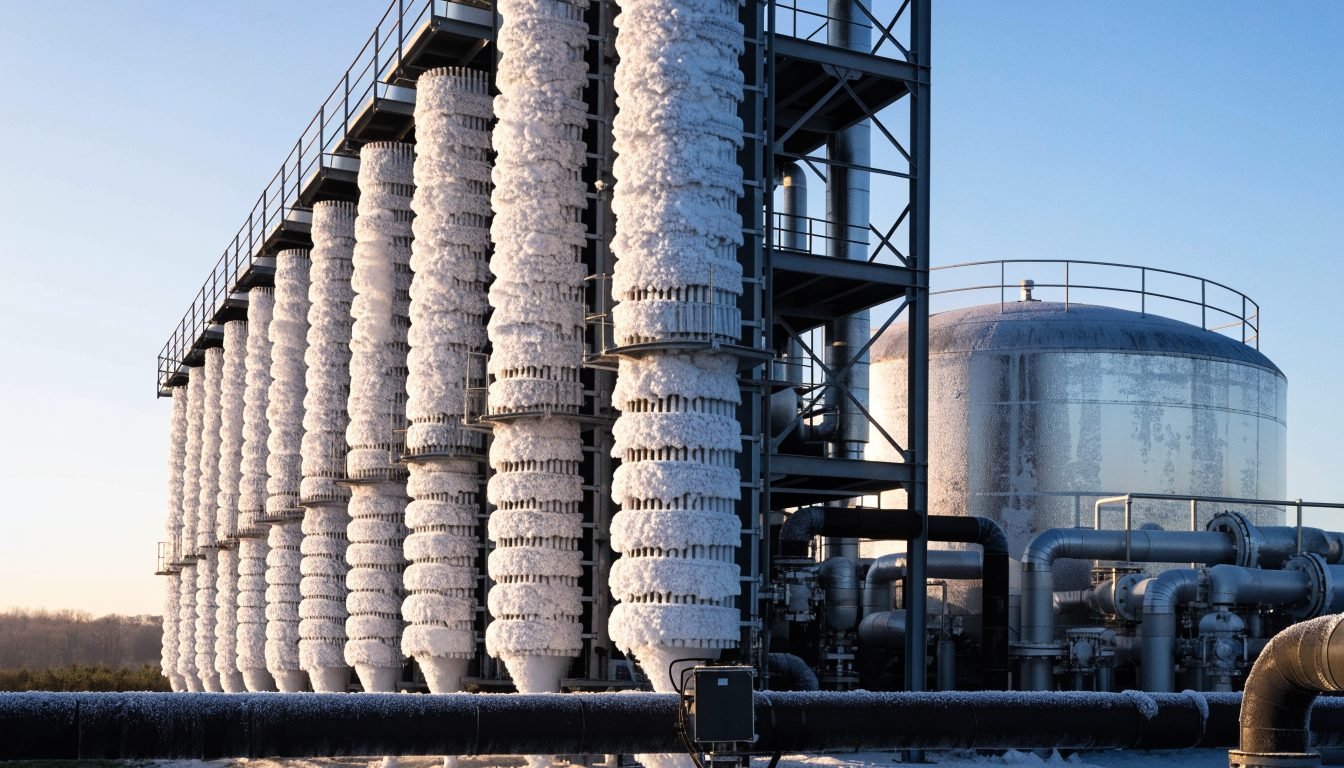
Ambient air vaporizer sizing depends on peak gas flow rate, the gas being vaporized, the site's lowest ambient temperature, and the duty cycle that allows the finned surface to defrost. The vaporizer must convert liquid to gas at your peak demand while ice buildup gradually reduces its capacity, so it is always sized with margin, not to the ideal condition.
An ambient air vaporizer uses heat from the surrounding air to boil cryogenic liquid into usable gas, with no external energy source. That makes it simple and low cost to run, but it also means its capacity rises and falls with the weather. Size it for the ideal day and it will underperform on a cold, humid morning when you need it most.
This guide explains how these vaporizers work and how to size them by flow, gas type, temperature, duty cycle, and series or parallel arrangement, so the gas keeps flowing at the pressure and temperature your process requires.
How does an ambient air vaporizer work?
An ambient air vaporizer is a bank of finned aluminium tubes exposed to open air. Cryogenic liquid flows up through the tubes, absorbs heat from the surrounding air across the fins, and leaves as gas. There is no burner, electric element or steam supply. The energy comes entirely from the temperature difference between the ambient air and the very cold liquid.
Because it draws heat from humid air, the cold surface collects frost and ice. Ice is an insulator, so as it builds the vaporizer transfers less heat and its capacity falls. This is normal, and it is the reason a vaporizer needs rest periods to defrost. Sizing has to account for the derated capacity during operation, not the clean, dry, first minute performance.
What is the first number in ambient air vaporizer sizing?
The starting point is peak gas flow rate, expressed in the flow units your process uses. Not the average, the peak. The vaporizer has to keep up with the busiest draw your plant places on it, because a shortfall shows up immediately as falling pressure and cold gas at the point of use.
- Peak flow rate, the highest sustained demand the vaporizer must meet
- Gas type, which changes the heat needed to vaporize a given flow
- Required outlet temperature, how warm the gas must be leaving the unit
- Inlet pressure from the tank, which sets the operating condition
If your demand is steady, the peak is close to the average. If it is bursty, the peak can be far higher, and the vaporizer must be sized to the burst even though the daily total looks modest.
How does gas type affect vaporizer capacity?
Nitrogen, oxygen, argon, LNG and CO2 do not vaporize identically. Each has its own boiling point and its own heat of vaporization, which is the energy needed to turn a unit of liquid into gas. A vaporizer rated for a given flow of one gas will not deliver the same flow of another. Always size against the actual gas in service.
Oxygen service adds cleanliness requirements on top of capacity, and LNG and CO2 have their own handling considerations. The heat transfer principle is the same, but the rated flow for your gas is the figure that matters, not a generic capacity.
Why does ambient temperature drive oversizing?
An ambient air vaporizer works on the temperature difference between the air and the liquid. On a warm day that difference is large and capacity is high. On a cold day the difference shrinks, less heat is available, and the same unit vaporizes less. Humidity makes it worse by building frost faster. So the sizing condition is the coldest, most humid day the site sees, not the annual average.
- Size for the lowest expected ambient temperature at the site, not the average
- Cold and humid climates need more surface area for the same flow
- Frost buildup reduces capacity through the operating period, so add margin
- A vaporizer sized for summer will underperform on a winter morning
This is why cold climate installations are deliberately oversized. The extra capacity is what keeps output stable when the weather removes the very heat the vaporizer depends on.
What is duty cycle and defrost time?
Duty cycle is the share of time a vaporizer can run before it must rest and shed the ice it has accumulated. A vaporizer that runs continuously eventually ices up so heavily that capacity collapses. Defrost time is the rest period during which the frost melts and heat transfer recovers. Sizing has to include this off time, because a unit that is defrosting is not vaporizing.
For continuous processes this is handled by installing more than one vaporizer and switching between them, so one runs while another defrosts. For intermittent demand, a single unit may recover during natural pauses in production.
Series or parallel: how should vaporizers be arranged?
Two arrangements solve two different problems. A parallel arrangement adds capacity and allows continuous supply, because units alternate between duty and defrost. A series arrangement passes the gas through more than one stage to raise the outlet temperature when a single pass leaves the gas too cold. Many installations combine both.
- Parallel: multiple units share the load and swap for defrost, giving continuous flow
- Series: gas passes through successive stages to reach the required outlet temperature
- Duty and standby: a spare unit covers defrost cycles or maintenance
- Combined layouts: parallel banks in series stages for high flow and warm outlet
The right layout follows from your peak flow, your climate, and whether your process can tolerate any interruption. A continuous, cold climate plant leans toward parallel banks with standby capacity.
How does the vaporizer relate to tank sizing?
The tank stores the liquid inventory and the vaporizer converts it to gas at the rate your process draws. They are sized together. A correctly sized tank paired with an undersized vaporizer still starves the process at peak, and an oversized vaporizer on a small tank wastes capital. Match the vaporizer's rated flow to the same peak demand you used for the tank, at the same site conditions.
If you are still setting the tank volume, our guide on how to size a cryogenic storage tank explains the demand and autonomy logic that feeds directly into vaporizer sizing.
How does KAF help size and supply vaporizers?
KAF Cryogenics supplies ambient air vaporizers and helps buyers size them against real flow, gas type and site climate. New units are built to specification, and certified second-hand units are inspected, non-destructively tested, and pressure tested, then sold with a document dossier and written warranty. Certified used equipment can ship from stock in weeks, while new fabrication typically runs months.
Because vaporizers pair with tanks, KAF can size the storage and vaporization together so the whole system holds pressure and flow at your peak. KAF also buys used equipment and accepts trade-in when you upgrade.
Frequently Asked Questions
Do I size an ambient air vaporizer for average or peak flow?
Always for peak flow. The vaporizer must meet the highest sustained demand your process places on it, because any shortfall shows up at once as falling pressure and cold gas at the point of use. If your demand is bursty, size to the burst even when the daily average looks modest.
Why do ambient air vaporizers need to be oversized in cold climates?
They draw heat from the surrounding air, so their capacity depends on the temperature difference between the air and the liquid. On cold, humid days that difference shrinks and frost builds faster, reducing output. Sizing for the coldest expected day, with added margin, keeps the gas flowing when the weather removes the heat the unit relies on.
What is duty cycle in vaporizer sizing?
Duty cycle is the share of time a vaporizer can operate before it must rest and defrost. Ice builds on the cold fins during operation and reduces heat transfer, so the unit needs off time to recover. For continuous supply, installations use multiple vaporizers that alternate between duty and defrost.
When should vaporizers be arranged in series versus parallel?
Parallel arrangements add capacity and allow continuous supply by alternating units for defrost. Series arrangements pass gas through more than one stage to raise the outlet temperature when a single pass leaves it too cold. High flow, cold climate plants often combine parallel banks with series stages.
Does gas type change vaporizer sizing?
Yes. Nitrogen, oxygen, argon, LNG and CO2 each have their own boiling point and heat of vaporization, so a unit rated for one gas will not deliver the same flow of another. Size against the actual gas in service, and note that oxygen adds cleanliness requirements on top of capacity.
Should the tank and vaporizer be sized together?
Yes. The tank holds the liquid and the vaporizer converts it at the rate the process draws. A well sized tank paired with an undersized vaporizer still starves the process at peak. Match the vaporizer's rated flow to the same peak demand and site conditions used for the tank.
Related reading
Need a vaporizer sized to your flow and climate?
Tell us your gas, peak flow and site location. KAF Cryogenics will size an ambient air vaporizer, pair it with the right tank, and quote new or certified used units from stock.
Request vaporizer sizing