
Buying a Used LNG Semi-Trailer: A Buyer's Checklist
A used LNG semi-trailer checklist: ADR validity, vacuum condition, inner vessel NDT, pump and vaporizer, chassis, and the documents to demand.
KAF Cryogenics5 min read
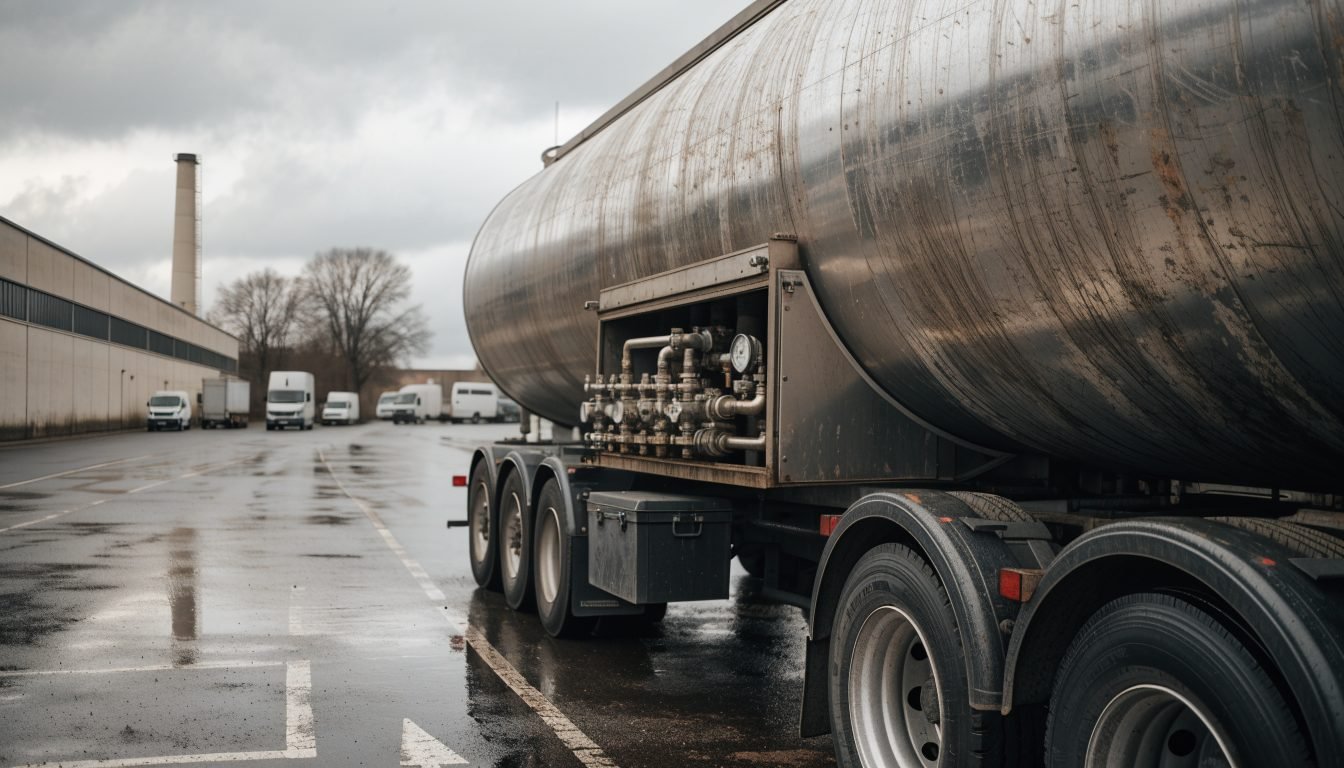
When buying a used LNG semi-trailer, confirm the ADR validity and next inspection date, the vacuum condition, the inner vessel and piping NDT results, the pump and vaporizer condition, and the chassis, then require a complete certification file. A used LNG road tanker is safe to run when its pressure vessel, transport approval, and process equipment have all been verified. This checklist covers each item.
An LNG semi-trailer is a transportable cryogenic vessel mounted on a road chassis. That means it must satisfy two sets of requirements at once: pressure-vessel integrity, and road transport approval for dangerous goods under ADR. A buyer needs evidence for both.
Work through the checks below before you commit, and treat any missing document as a gap to close rather than a detail to overlook.
What matters most when buying a used LNG semi-trailer?
The priorities are the transport approval, the integrity of the cryogenic vessel, and the condition of the process equipment that loads and unloads the LNG. A trailer can look sound and still be off the road if its ADR inspection has lapsed, or lose product quickly if its vacuum has degraded.
- Valid ADR approval with a clear next inspection date.
- A verified vacuum on the cryogenic vessel.
- NDT results on the inner vessel and piping.
- A functioning pump and vaporizer.
- A sound chassis and running gear.
- A complete certification and document file.
Why does the ADR inspection date matter?
ADR is the European agreement governing the road transport of dangerous goods, and cryogenic road tankers must undergo periodic ADR inspection to stay legal for transport. A used LNG semi-trailer with a lapsed or soon-to-expire ADR date cannot be put straight to work without recertification.
Ask for the current ADR certificate and the next inspection due date, and factor the remaining validity into your decision. A trailer sold with recent ADR approval gives you usable time on the road before the next periodic inspection falls due.
How do you check the vacuum on an LNG trailer?
The cryogenic vessel on the trailer is vacuum insulated, and that vacuum controls boil-off during transport and standing. Ask for a recent vacuum reading and inspect the outer shell for warning signs.
- Frost or condensation on the outer shell, which can indicate degraded insulation.
- A boil-off or pressure-build rate above the normal range for the vessel.
- A documented vacuum measurement taken during the pre-sale inspection.
As a benchmark for stationary tanks, a sound modern cryogenic vessel loses roughly 0.2 to 0.6 percent per day, and vacuum should be read every 6 to 12 months in service. A degraded vacuum can often be restored by re-evacuation, but it should be identified and priced before purchase.
What NDT should the inner vessel and piping have?
The inner vessel holds LNG at cryogenic temperature under pressure, so its integrity is central. Non-destructive testing (NDT) inspects the pressure-bearing welds and shell for cracks or flaws without cutting into the material.
- NDT on the inner vessel welds and shell.
- NDT or inspection of the transfer piping and joints.
- Confirmation that low-temperature materials meet impact-testing requirements to avoid brittle fracture below about -150 C.
- A pressure test result confirming the vessel holds its rated pressure.
What condition should the pump and vaporizer be in?
The process equipment determines whether the trailer can actually deliver product. On many LNG trailers this includes a pump for transfer and, depending on configuration, a vaporizer for pressure building or off-loading.
- The transfer pump, checked for correct operation and seal condition.
- The vaporizer, checked for damage and correct function where fitted.
- Valves, hoses, and couplings, checked for leaks and wear.
- Pressure gauges and level instruments, checked for accurate reading.
What should you check on the chassis and running gear?
The trailer is a road vehicle, so the chassis and running gear affect both safety and running cost. This is standard commercial vehicle diligence applied alongside the cryogenic checks.
- The chassis frame and mountings, checked for corrosion and cracks.
- Axles, suspension, and braking systems.
- Tyres and wheels.
- Lighting and road-legal equipment.
What documents must come with a used LNG semi-trailer?
The document file is what proves everything above. Require it in full before purchase, because a transportable cryogenic vessel without its papers is difficult to certify and to operate legally.
- The valid ADR certificate and next inspection date.
- The manufacturer data and the code the vessel was built to, PED 2014/68/EU or ASME.
- Confirmation that the vessel meets EN 13530 for transportable cryogenic vessels.
- The results of the visual inspection, NDT, vacuum test, and pressure test.
- Relief valve settings and service records, plus a written warranty.
KAF Cryogenics supplies semi-trailers through both channels: new units built to specification and certified second-hand units that are inspected, NDT tested, and vacuum and pressure tested, with a document dossier and written warranty. Because certified units are held in stock, a trailer can typically be delivered in weeks rather than the months new fabrication takes. KAF also buys used equipment and accepts trade-in on new orders.
Frequently Asked Questions
What is ADR and why does it apply to LNG trailers?
ADR is the European agreement covering the road transport of dangerous goods. Cryogenic road tankers, including LNG semi-trailers, must undergo periodic ADR inspection to remain legal for transport. Always confirm the current ADR certificate and the next inspection date before buying.
Which standard covers a transportable LNG vessel?
EN 13530 covers transportable cryogenic vessels, while EN 13458 covers static ones. An LNG semi-trailer is transportable, so its vessel should meet EN 13530. The document file should confirm this along with the PED or ASME code it was built to.
How can I tell if the trailer's vacuum has degraded?
Look for frost or condensation on the outer shell and a boil-off or pressure-build rate above the normal range. Ask for a recent vacuum reading from the pre-sale inspection. A degraded vacuum can often be restored by re-evacuation, but it should be identified and priced before purchase.
What NDT should a used LNG trailer have?
The inner vessel welds and shell and the transfer piping should have non-destructive testing, and the vessel should have a pressure test confirming it holds its rated pressure. NDT checks for cracks and flaws in the pressure boundary without cutting into the material.
What documents should come with a used LNG semi-trailer?
Require the valid ADR certificate with next inspection date, the manufacturer data and vessel code, EN 13530 conformity, the inspection, NDT, vacuum, and pressure test results, relief valve records, and a written warranty. A transportable vessel without its papers is hard to certify and operate.
Can I get a used LNG trailer quickly?
Certified used trailers held in stock can usually be delivered in weeks, while new fabrication to specification takes months. Confirm availability and current ADR validity for the specific unit with a quote.
Related reading
Looking for a road-ready LNG trailer?
KAF Cryogenics supplies new and certified used LNG semi-trailers, inspected, NDT tested, and vacuum and pressure tested, with a document dossier, ADR papers, and written warranty. Tell us your capacity and route and we will match a unit from stock or quote a new build.
Request a trailer quote