
What Is Vacuum Loss in a Cryogenic Tank and How to Detect It
What is vacuum loss in a cryogenic tank? Learn the symptoms, how it is measured, and how to restore vacuum. Practical detection guide from KAF Cryogenics.
KAF Cryogenics6 min read
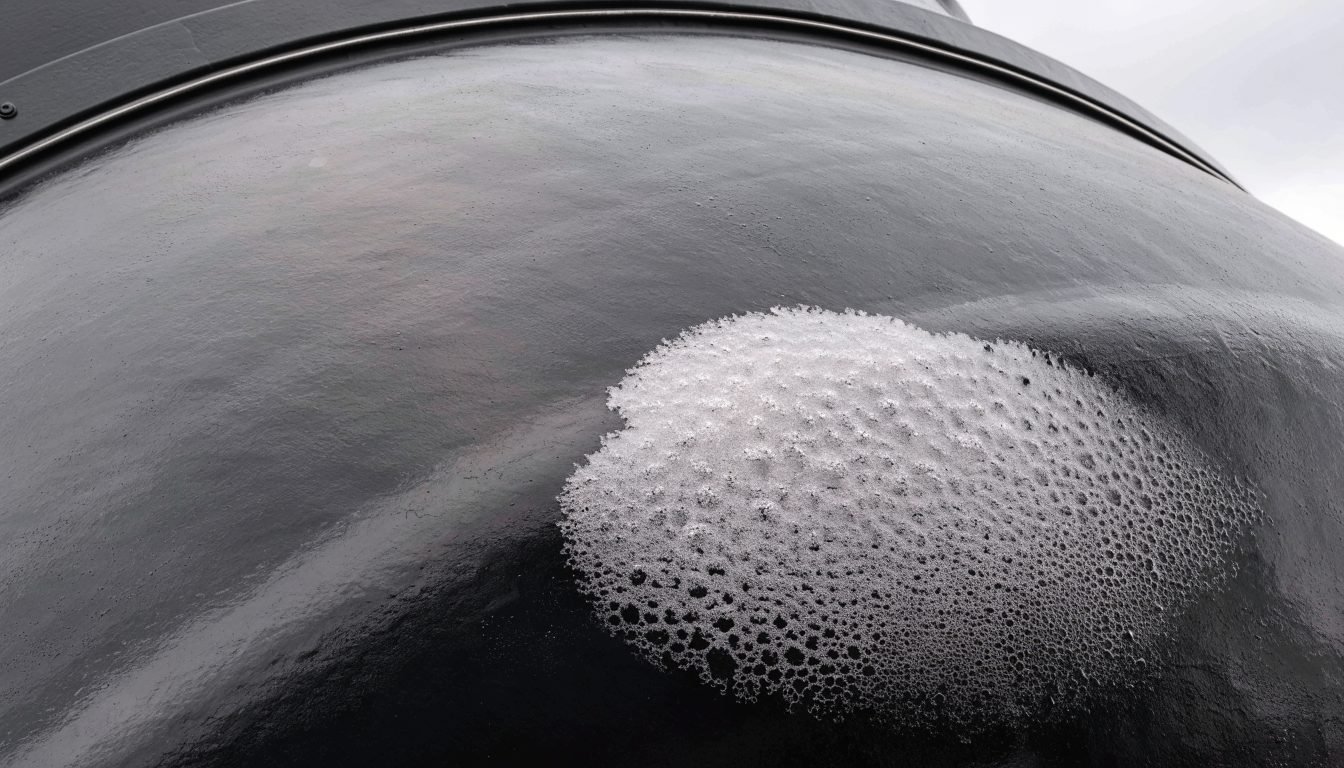
Vacuum loss in a cryogenic tank is the degradation of the vacuum between the inner and outer vessel, which is what insulates the cold liquid. When vacuum weakens, heat enters faster. The main symptoms are frost or sweating on the outer shell, rising boil-off, and faster pressure build.
This guide explains how the vacuum jacket works, the verified signs of vacuum loss, how vacuum is measured, and what can be done to restore it. It is written for operators and buyers who need to tell a normal tank from one that needs attention.
KAF tests vacuum on every certified second-hand unit and can advise on re-evacuation, so the checks below reflect how the fault is actually diagnosed in the field.
How does the vacuum-insulated jacket work?
A cryogenic tank is built as two vessels, one inside the other. The inner vessel holds the cold liquid, and the space between the inner and outer shells is evacuated to a high vacuum. That vacuum, often combined with multilayer insulation, is what keeps ambient heat from reaching the liquid.
Vacuum is an effective insulator because it removes the gas that would otherwise carry heat by conduction and convection across the gap. As long as the vacuum holds, the tank stays cold with only slow, predictable heat ingress. When the vacuum degrades, that heat barrier weakens and the tank warms faster.
What is vacuum loss in a cryogenic tank?
Vacuum loss is any rise in pressure inside the insulating space that reduces its insulating value. It can happen slowly, as trapped gases are released over years, or suddenly, if a weld, seal, or fitting develops a leak that lets air or moisture into the jacket.
- Gradual loss: slow outgassing or a small leak degrading the vacuum over time.
- Sudden loss: a failure in a weld, seal, or vacuum port that lets air in quickly.
- Either way the result is the same, more heat reaching the liquid and higher boil-off.
Because the vacuum sits hidden between the shells, you usually detect the problem through its effects on the tank rather than by seeing the vacuum itself.
What are the symptoms of vacuum loss?
There are three verified symptoms of vacuum loss that operators can observe directly. If you see any of them, the tank should be checked.
- Frost or sweating on the outer shell: cold reaching the outer surface where it should not, showing as ice patches or condensation.
- Rising boil-off: the tank losing more liquid per day than its normal evaporation rate.
- Faster pressure build: tank pressure climbing more quickly than usual between uses.
A healthy vacuum-insulated tank keeps its outer shell close to ambient temperature. Frost or condensation on the outside is a direct sign that heat is crossing the jacket, and it usually appears alongside higher boil-off and quicker pressure rise.
How do you tell vacuum loss from normal behavior?
Every cryogenic tank has some heat ingress and some boil-off; that is normal. The question is whether the numbers have moved beyond the expected range for that tank.
- Modern stationary cryogenic tanks lose roughly 0.2 to 0.6 percent of contents per day to static evaporation, depending on size and insulation.
- A tank suddenly losing much more than its established rate points to a vacuum or insulation problem.
- Normal pressure cycling is gradual and predictable; a sharp, sustained climb is a warning sign.
- Frost on the outer shell is not normal on a vacuum-insulated tank and should always be investigated.
Keeping a simple log of daily loss and pressure behavior makes it far easier to spot the moment a tank drifts away from its baseline.
How is vacuum measured in a cryogenic tank?
Vacuum is measured through the tank's vacuum port using an appropriate gauge that reads the pressure in the insulating space. A very low reading means a good vacuum and good insulation; a rising reading means the vacuum is degrading.
- Vacuum should be read every 6 to 12 months as part of routine maintenance.
- The reading is taken at the vacuum port by a technician with the correct gauge.
- Trending the reading over time shows whether the vacuum is stable or slowly worsening.
Regular readings turn vacuum loss from a surprise into a trend you can act on before boil-off and pressure problems become costly.
What can be done about vacuum loss?
A tank that has lost vacuum is not automatically scrap. Depending on the cause and the tank's condition, the vacuum can often be restored by re-evacuation, sometimes with replacement of the getter or adsorbent material that helps hold the vacuum.
- Minor or gradual loss: re-evacuation by a specialist can restore insulating performance.
- Leak-related loss: the leak source must be found and repaired before re-evacuation will hold.
- Severe damage: if the jacket or inner vessel is compromised, replacement may be the better option.
Deciding between restoration and replacement depends on the tank's age, the cause of the loss, and the cost of the work. A specialist assessment gives you a realistic answer rather than a guess.
How does KAF handle vacuum on its tanks?
KAF tests vacuum and pressure on every certified second-hand unit before sale, alongside inspection and non-destructive testing, and each unit ships with a document dossier and written warranty. That means a certified used tank arrives with its vacuum verified, not assumed.
KAF supplies storage tanks new, built to specification, and as certified second-hand units, with certified used stock able to ship in weeks while new fabrication typically takes months. If you have a tank showing vacuum-loss symptoms, or want a unit whose vacuum has been verified, KAF can advise on testing, re-evacuation, and supply.
Frequently Asked Questions
What are the first signs of vacuum loss in a cryogenic tank?
The verified symptoms are frost or sweating on the outer shell, rising boil-off, and faster pressure build. Frost on the outside is especially telling, because a healthy vacuum-insulated tank keeps its outer shell near ambient temperature. Any of these signs means the tank should be checked.
Is frost on the outside of a cryogenic tank always a problem?
On a vacuum-insulated tank, frost or condensation on the outer shell is not normal and should always be investigated. It indicates that cold is reaching the outer surface, which means heat is crossing the jacket. This usually appears together with higher boil-off and quicker pressure rise.
How often should vacuum be checked?
Vacuum should be read every 6 to 12 months as part of routine maintenance. A technician takes the reading at the vacuum port with the correct gauge, and trending the value over time shows whether the vacuum is stable or slowly worsening.
Can a cryogenic tank that lost vacuum be repaired?
Often yes. Minor or gradual vacuum loss can be corrected by re-evacuation, sometimes with replacement of the adsorbent material. If a leak caused the loss, the leak must be found and repaired first. Severe jacket or inner-vessel damage may make replacement the better choice.
How do I know if boil-off is too high?
Compare it to the tank's normal rate. Modern stationary cryogenic tanks lose roughly 0.2 to 0.6 percent of contents per day to static evaporation. A tank suddenly losing much more than its established baseline points to a vacuum or insulation problem worth investigating.
Does KAF verify vacuum on used tanks?
Yes. Every certified second-hand unit is vacuum and pressure tested, inspected, and non-destructive tested before sale, and ships with a document dossier and written warranty. So a certified used tank arrives with its vacuum verified rather than assumed.
Related reading
Seeing frost, high boil-off, or rising pressure?
Tell KAF what your tank is doing. We can advise on vacuum testing and re-evacuation, or supply a certified unit whose vacuum has been verified.
Talk to KAF about your tank