
Is a Used Cryogenic Tank Safe to Buy? A Pre-Purchase Checklist
A used cryogenic tank is safe when it passes inspection, NDT, and vacuum and pressure testing. Use this pre-purchase checklist before you buy.
KAF Cryogenics6 min read
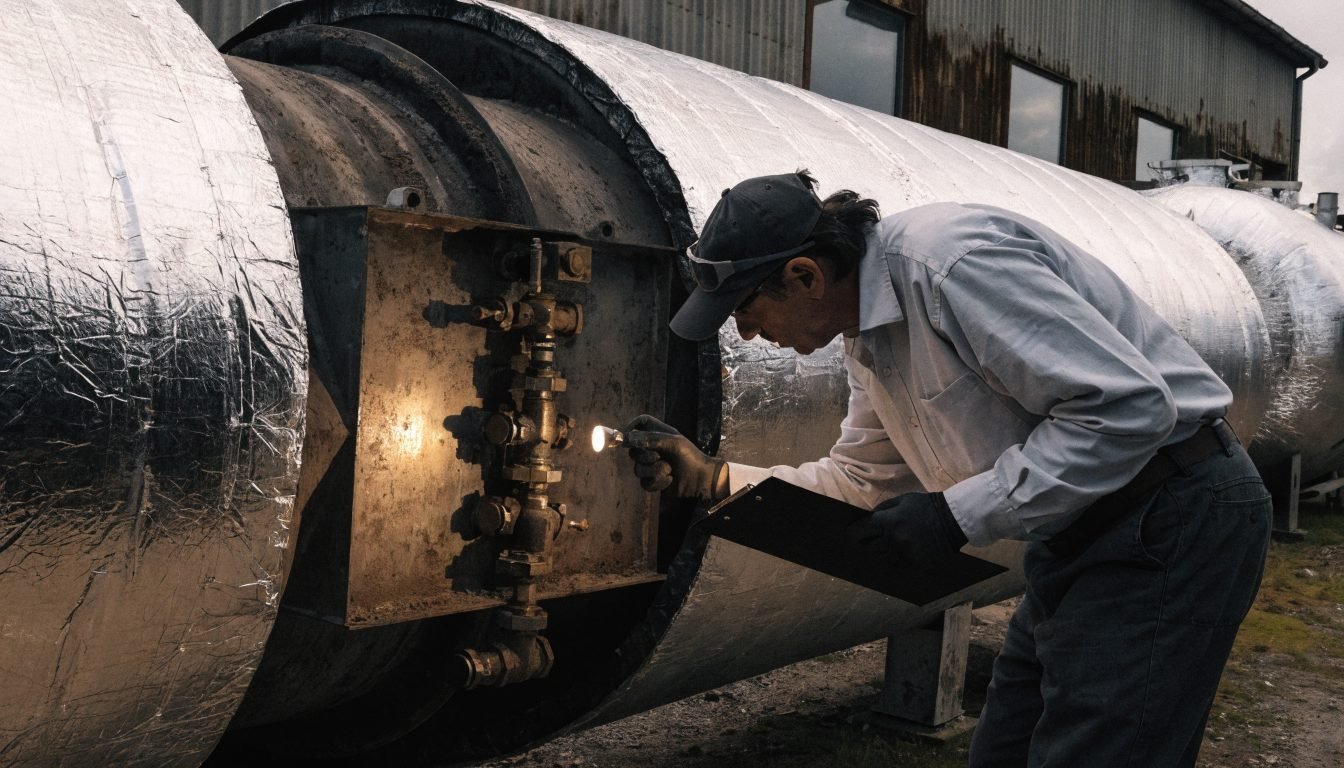
A used cryogenic tank is safe to buy when it has passed a full inspection, non-destructive testing (NDT), and vacuum and pressure testing, and comes with a document dossier and a written warranty. Safety depends on how the unit was verified before sale, not on its age. This checklist covers the exact checks a buyer should demand.
Cryogenic vessels are engineered for decades of service. An inner vessel that has been kept under vacuum and operated within its design limits can perform for many years. The risk in the second-hand market is not the equipment itself but buying a unit whose condition has never been documented.
The way to remove that risk is procedural. Ask for evidence at each stage below, and treat any tank that cannot produce it as unverified until proven otherwise.
Is a used cryogenic tank safe, and what makes it safe?
A used cryogenic tank is safe when its condition has been confirmed by inspection and testing rather than assumed. A cryogenic storage vessel is a double-walled unit: an inner pressure vessel holds the liquefied gas at very low temperature, and an outer shell maintains a vacuum that insulates it. Both walls and the vacuum between them must be verified before the tank returns to service.
Three test results turn an unknown used unit into a safe one: NDT on the pressure-bearing welds and shell, a vacuum measurement that confirms the insulation is intact, and a pressure test that confirms the vessel holds its rated pressure. Paired with valid certification papers and a written warranty, these results give a buyer a defensible basis for putting the tank into operation.
What certification and paperwork should come with the tank?
The document dossier is the first thing to request, because it tells you what the tank is and how it was built. Without it, later checks have nothing to reference.
- The original manufacturer data report or nameplate details, showing design pressure, capacity, and the code the vessel was built to (PED 2014/68/EU or ASME).
- The applicable standard for the vessel type: EN 13458 for static vacuum-insulated cryogenic vessels, or EN 13530 for transportable ones.
- Records of impact (Charpy V-notch) testing for the low-temperature materials, which prevents brittle fracture in the cold service range.
- Relief valve set pressures and any overhaul or recertification records for the safety devices.
- A written warranty from the seller and the results of the pre-sale inspection and testing.
How do you check vacuum integrity on a used tank?
The vacuum in the annular space is what keeps the tank cold and controls boil-off. A weak vacuum shows up as excessive evaporation and pressure build. Ask for a recent vacuum reading and, ideally, witness or receive a fresh one before purchase.
Visible warning signs are easy to spot on site. Frost or condensation on the outer shell, sweating patches, or a boil-off rate above the normal range all point to degraded insulation. A modern stationary cryogenic tank in good condition loses roughly 0.2 to 0.6 percent of its contents per day, depending on size and insulation.
What should the inner vessel and welds be tested for?
The inner vessel holds pressure at cryogenic temperature, so its integrity is the core safety question. This is where non-destructive testing matters. NDT inspects welds and shell material for cracks or flaws without cutting into the vessel.
- NDT on the pressure-bearing welds and shell to confirm there are no cracks or defects.
- A pressure test confirming the inner vessel holds its maximum allowable working pressure.
- Confirmation that the low-temperature materials meet impact-testing requirements for service below about -150 C.
- A check that no unauthorized repairs or modifications have been made outside the original code.
What condition should the valves and relief devices be in?
Valves, gauges, and pressure-relief devices are the parts most likely to need attention on a used unit, and they are also safety-critical. Relief valves protect the vessel from overpressure and must be set correctly and functioning.
- Pressure-relief valves set to the correct pressure and recently tested or overhauled.
- Fill, withdrawal, and vent valves operating without leaks.
- Pressure gauges and level indicators reading accurately.
- The pressure-building circuit and economizer, where fitted, functioning as designed.
A responsible seller overhauls or replaces worn safety devices as part of certification rather than passing them on as-is.
Why does service history matter for a used cryogenic tank?
Service history tells you how the tank was used and whether it was maintained. A vessel that held inert nitrogen is a different proposition from one that held oxygen, which requires oxygen-clean condition. History also flags whether the vacuum has been re-established at any point and whether relief devices were serviced on schedule.
Where full history is not available, the pre-sale inspection and test results become the reference point. This is why a documented certification process matters more than a verbal account of a tank's past.
How does KAF certify its second-hand cryogenic tanks?
KAF Cryogenics supplies used cryogenic equipment through a certified second-hand channel. Each unit is inspected, subjected to NDT, and vacuum and pressure tested before sale. The tank is then supplied with a document dossier covering those results and a written warranty.
Because these units are held in stock, a certified tank can typically be delivered in weeks, while new fabrication to specification runs to months. KAF also buys used equipment and accepts trade-in on new orders, so a buyer replacing an older tank has a route to move it on.
Frequently Asked Questions
How long can a cryogenic tank last?
Cryogenic storage vessels are designed for decades of service. As long as the inner vessel stays within its pressure limits and the vacuum insulation is maintained, a well-built tank can operate for many years. Age alone is not a reason to reject a used unit if it passes inspection and testing.
What is NDT and why does it matter for a used tank?
NDT stands for non-destructive testing. It inspects the pressure-bearing welds and shell of the inner vessel for cracks or flaws without cutting into the material. For a cryogenic tank it is the primary way to confirm the pressure vessel is sound before returning it to service.
How can I tell if a used tank has lost vacuum?
Look for frost or condensation on the outer shell, sweating patches, and a boil-off rate above the normal range. A modern stationary tank in good condition loses roughly 0.2 to 0.6 percent per day. Higher losses suggest the vacuum insulation has degraded and should be measured.
Should a used cryogenic tank come with a warranty?
Yes. A certified second-hand tank should be sold with a written warranty and a document dossier covering the inspection, NDT, and vacuum and pressure test results. A warranty and test records are what separate a verified unit from an unverified as-is sale.
Is a used tank certified to PED or ASME acceptable?
Both codes are valid. PED 2014/68/EU applies to the European market and ASME is the US code. The correct one depends on the destination market, not on quality. Confirm the tank's certification matches the market where you will operate it.
How quickly can I get a certified used cryogenic tank?
Because certified used units are held in stock, delivery is typically measured in weeks. New fabrication to specification usually takes months. This lead-time difference is a common reason buyers choose a certified second-hand unit.
Related reading
Need a verified used cryogenic tank?
KAF Cryogenics supplies certified second-hand tanks that are inspected, NDT tested, and vacuum and pressure tested, with a document dossier and written warranty. Tell us your gas, capacity, and pressure needs and we will match a unit from stock or quote a new build.
Request a quote