
Lead Times in Cryogenic Equipment: Why Stock Delivery Matters
Why cryogenic tank lead time matters: new fabrication runs months while certified used ships from stock in weeks. See when speed changes a project.
KAF Cryogenics5 min read
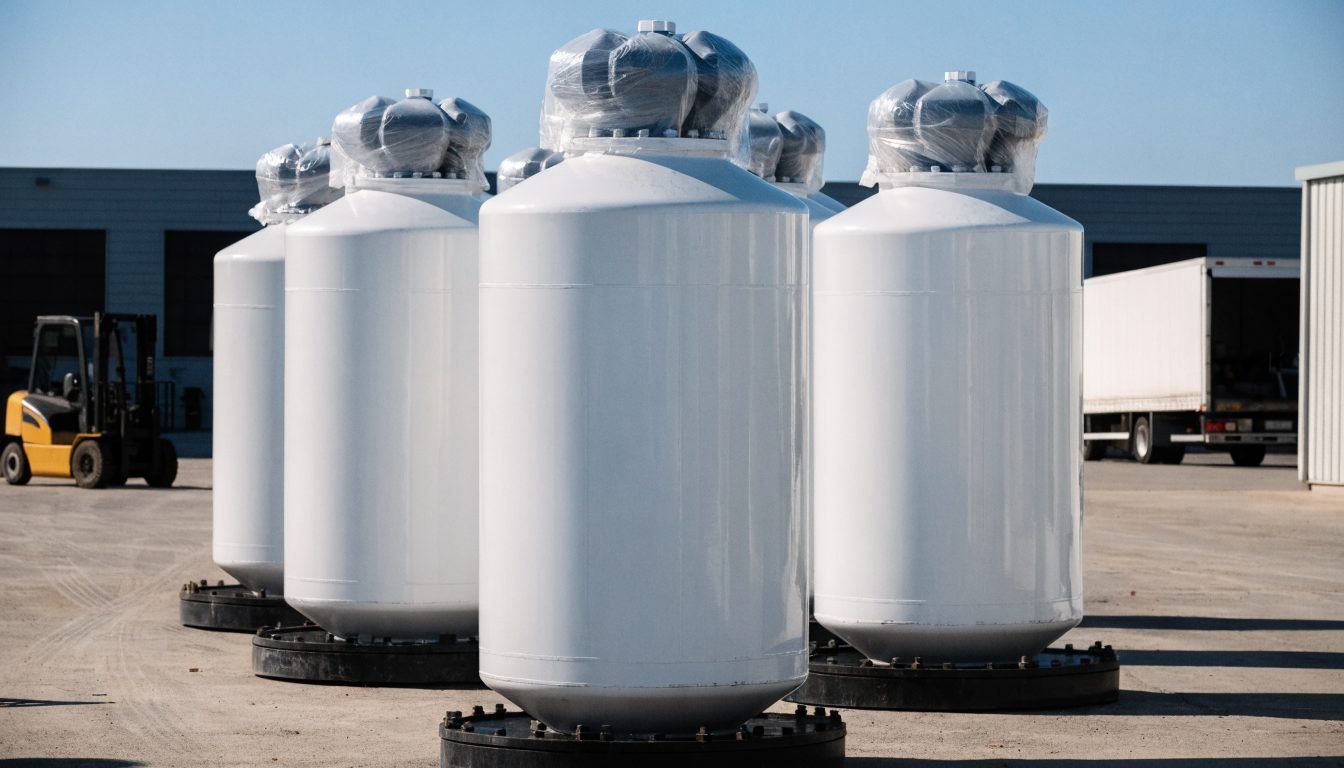
Cryogenic tank lead time is the gap between placing an order and having a working, certified unit on site. New fabrication to specification commonly takes months, while a certified second-hand unit held in stock can ship in weeks. On time-bound projects that difference often decides whether the plan holds.
Lead time is not a detail buried in a purchase order. It sets the date your plant can start producing, the day a route can begin delivering, and the point at which a contract starts earning. When the calendar is fixed, the availability of the equipment can matter as much as its price.
This guide explains what drives cryogenic equipment lead times, how the new and certified used channels compare, and how to plan a purchase so the equipment date does not become the project's bottleneck.
What is a typical cryogenic tank lead time?
There is no single number, because lead time depends on the supply channel. The honest way to frame it is a contrast between building from zero and delivering from stock.
- New, built to specification: commonly months of fabrication, because the vessel is engineered, welded, tested, and certified from raw material.
- Certified second-hand from stock: often weeks, because the unit already exists and has been inspected, NDT tested, and vacuum and pressure tested.
KAF can deliver certified used equipment from stock in weeks, while the industry norm for new fabrication is months. Both are legitimate routes. The right one depends on your specification and your deadline.
Why does new cryogenic tank fabrication take months?
A new cryogenic vessel is a pressure vessel with a vacuum-insulated jacket, built and documented under a pressure code. Each stage takes time and cannot be skipped.
- Engineering and design approval for the specified pressure class and gas service.
- Material procurement, including low-temperature steels that require impact (Charpy V-notch) testing to avoid brittle fracture below about minus 150 C.
- Fabrication and welding under a controlled quality system such as ISO 3834-2.
- Evacuation of the vacuum space and the associated dwell time.
- Pressure testing, inspection, and certification to PED 2014/68/EU or ASME.
- Coating, fit-out of valves and instruments, and final documentation.
None of this is padding. It is the reason a certified new vessel is trustworthy. It is also the reason the calendar runs in months, not weeks.
How does certified used deliver in weeks instead of months?
A certified second-hand unit is already built and already documented. The time-consuming fabrication is behind it. What remains is verification, and that is what KAF completes before the unit is offered.
- Visual inspection of the vessel and jacket.
- NDT (non-destructive testing) of the inner vessel and piping.
- Vacuum test to confirm insulation integrity.
- Pressure test to confirm the vessel is sound.
- Valve and relief device checks or overhaul.
- A document dossier and a written warranty issued with the unit.
Because the vessel exists in stock and the testing is done, the remaining path to site is measured in weeks. That is a different economics from waiting out a fabrication cycle.
When does lead time change a project's economics?
Speed is not always the deciding factor, but there are clear cases where it is.
- A contract or tender with a fixed start date that a fabrication cycle would miss.
- A seasonal demand peak where every week of delay is lost throughput.
- An unplanned outage where an existing tank has failed and production is stopped.
- A phased project where a bridging unit keeps the site running until a new build arrives.
- An export window tied to shipping schedules or letters of credit.
In each of these, a unit that ships in weeks can preserve revenue that months of waiting would erase. In slower, planned expansions the lead-time pressure is lower, and a new build to exact specification may be the better fit.
New or certified used: which lead-time route fits?
The choice is rarely only about cost. It is about matching the specification and the deadline to the right channel.
Choose new fabrication when
- The specification is unusual and must be exact from new.
- The destination market requires a specific certification produced from the outset.
- The timeline is comfortable and can absorb a fabrication cycle.
Choose certified used when
- The deadline is tight and a fabrication cycle would miss it.
- A suitable stock unit matches your capacity and pressure needs.
- You want a tested unit with a document dossier and written warranty, delivered in weeks.
KAF also accepts trade-in on new orders and buys used equipment, so an idle unit can shorten the effective lead time and cost of the next purchase.
How do you plan a purchase around lead time?
Treat the equipment date as a project input, not an afterthought. A few habits keep it from becoming the bottleneck.
- Fix the on-site date first, then work backward through delivery, transport, and testing.
- Ask the supplier for the stock position and the realistic fabrication window on the same call.
- Confirm the certification code the destination market needs before you commit, so you do not rebuild later.
- Ask what documentation ships with the unit, so acceptance on site is not delayed.
- Keep a fallback in mind, such as a certified used bridging unit, if the primary route slips.
When you share the deadline up front, KAF can quote both the stock route and the new-build route against your date, so the decision is made on facts rather than hope.
Frequently Asked Questions
How long does a new cryogenic tank take to build?
A new cryogenic tank built to specification commonly takes months of fabrication. The time covers engineering, low-temperature material procurement, welding, vacuum evacuation, pressure testing, and certification to PED or ASME. None of these stages can be skipped without compromising the vessel.
How fast can a certified used cryogenic tank be delivered?
A certified second-hand cryogenic tank held in stock can ship in weeks. The vessel already exists and has been inspected, NDT tested, and vacuum and pressure tested, so the long fabrication cycle is already behind it.
Why is stock delivery so much faster than new fabrication?
New fabrication builds and certifies a vessel from raw material, which takes months. A stock unit is already built and documented, so only verification remains. That is why certified used ships in weeks while new fabrication runs into months.
Does a faster lead time mean lower quality?
No. A certified second-hand unit from KAF is inspected, NDT tested, and vacuum and pressure tested, and comes with a document dossier and a written warranty. The speed comes from the vessel already existing, not from skipping verification.
When should I choose a new build despite the longer lead time?
Choose new fabrication when the specification is unusual, when the destination market requires a specific certification from new, or when your timeline can absorb a fabrication cycle. In those cases the exact specification outweighs the speed of a stock unit.
Can I bridge a tight deadline with used equipment?
Yes. A certified used unit from stock can keep a site running or meet a fixed contract date while a new build is fabricated. KAF can quote a stock unit and a new build against the same deadline so you can plan the bridge.
Related reading
Working to a fixed date?
Share your on-site deadline, capacity, and pressure needs. KAF will quote both a certified used unit from stock and a new build to specification, with realistic lead times for each.
Get lead times and a quote