
Cryogenic Tank Price: What Drives the Cost
What determines a cryogenic tank price: capacity, pressure class, material, certification, insulation, and new vs used. Why there is no fixed list price.
KAF Cryogenics6 min read
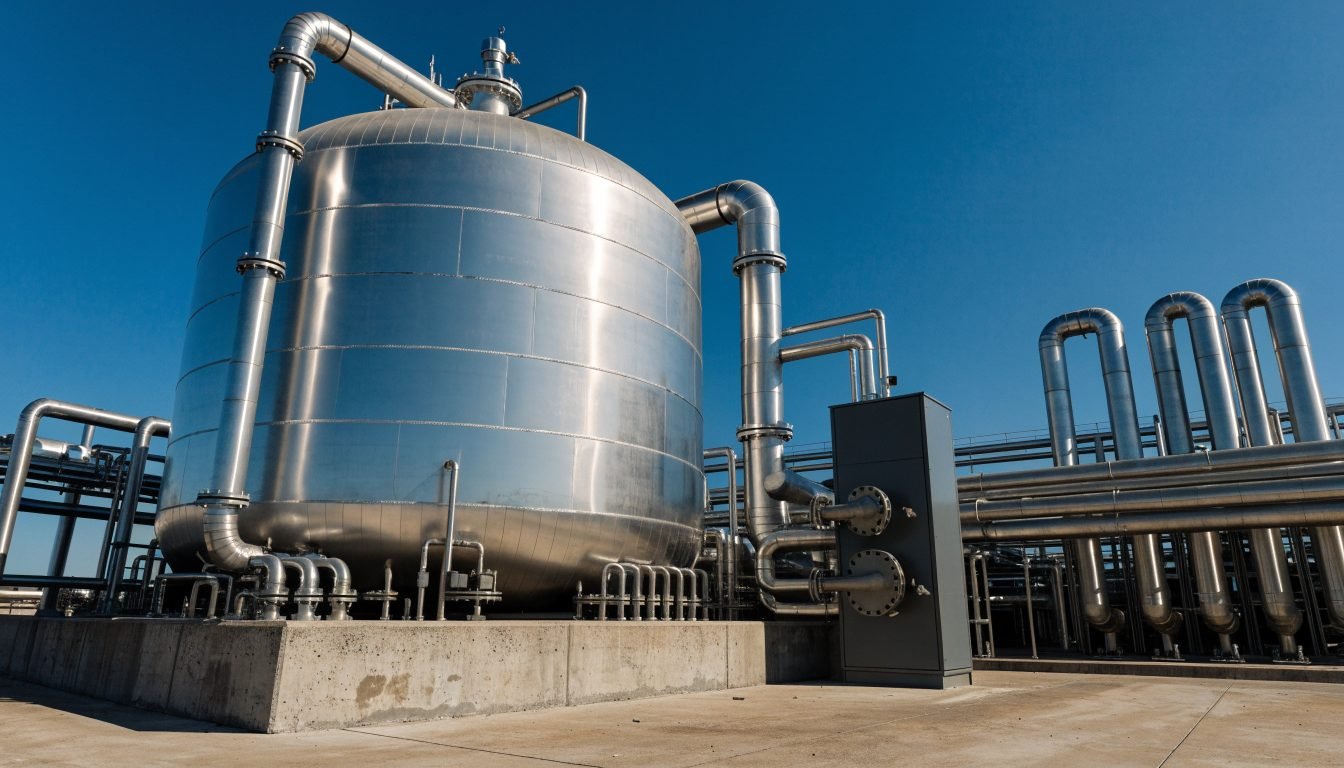
A cryogenic tank price is set by capacity, pressure class, material, certification code, insulation, options, and whether the unit is new or certified second-hand. There is no fixed list price, because each of these choices changes the build. The reliable way to know the cost is an accurate quote against your specification.
That is not evasion. A cryogenic vessel is engineered to a duty, a gas, and a destination market, and two tanks of the same nominal volume can differ in cost once pressure class and certification are set. Understanding the cost drivers lets you specify sensibly and compare quotes fairly.
This guide breaks down what moves a cryogenic tank price up or down, why the new and certified used channels differ on cost and lead time, and how to request a quote that reflects your real requirement.
Why is there no fixed cryogenic tank price?
A cryogenic tank is a made-to-duty pressure vessel, not a catalog commodity. The final cost depends on choices that change the engineering, the materials, and the certification path. A single list price would either overcharge simple duties or understate demanding ones.
Because of that, the honest answer to a price question is a quote tied to a specification. When you share capacity, gas, pressure needs, and destination market, the cost becomes concrete. Without those, any number is a guess.
How does capacity affect cryogenic tank price?
Capacity is the first and largest driver. A larger vessel uses more material, more welding, and a larger vacuum jacket, all of which add cost. But the relationship is not simply linear per liter.
- Larger tanks often cost less per unit of stored volume than very small ones, because fixed engineering and fittings spread over more capacity.
- Very large volumes can shift the practical choice toward horizontal vessels, which changes installation and foundation costs.
- Undersizing to save on the tank can raise delivery frequency and running cost, so size to real demand, not to the lowest sticker.
Sizing to actual consumption and delivery frequency protects both the purchase cost and the running cost. See the sizing guides linked below for the method.
How does pressure class change the cost?
Pressure class, expressed through the maximum allowable working pressure (MAWP), sets how thick and how strong the vessel must be. A higher pressure class means more material and more demanding fabrication.
- Higher MAWP requires thicker walls and heavier heads, adding material and welding cost.
- The right class depends on your delivery pressure and how you manage boil-off, not on paying for the highest available.
- Specifying more pressure than the process needs adds cost without benefit.
Choose the pressure class from the process requirement. Over-specifying it is a common and avoidable way to inflate a quote.
How do material and certification affect price?
Cryogenic service demands low-temperature materials, and the certification code sets the rules those materials and welds must satisfy. Both feed into the cost.
- Low-temperature steels require impact (Charpy V-notch) testing to avoid brittle fracture below about minus 150 C, which is part of the build cost.
- The certification code, ASME (US, Section VIII) or PED 2014/68/EU (European, CE marking), sets documentation and inspection requirements.
- The correct code depends on the destination market, not on quality, so paying for a code your market does not require adds cost without value.
- Welding quality systems such as ISO 3834-2 and standards like EN 13458 for static vessels underpin the documented build.
Match the certification to where the tank will operate. A vessel certified to the wrong code for its market can mean rework or rejection, which is far costlier than getting it right at the quote stage.
What else is in a cryogenic tank quote?
Beyond the vessel itself, several items sit inside a complete quote. Knowing them helps you compare offers on equal terms.
- Insulation and vacuum quality, which affect boil-off and long-term running cost.
- Valves, relief devices, gauges, and the pressure-building or economizer circuit.
- Vaporizer pairing where the tank feeds gas-phase supply.
- Coatings, supports, and any site-specific fittings.
- Documentation, testing, and the certification dossier.
- Transport to site and, for road units, the running gear and inspection status.
A low headline number that omits testing, documentation, or delivery is not truly lower. Compare complete scopes, not just the vessel line.
How do new and certified used compare on price and lead time?
The supply channel changes both the cost profile and the delivery date. Neither is universally cheaper; it depends on the specification and the timeline.
New, built to specification
A new build lets you fix every parameter, but it carries the full engineering, material, and certification cost, and commonly takes months of fabrication.
Certified second-hand
A KAF certified second-hand tank is inspected, NDT tested, and vacuum and pressure tested, and comes with a document dossier and a written warranty. It ships from stock in weeks. For a matching stock unit, it can lower both the cost and the wait compared with a new build.
KAF also accepts trade-in on new orders and buys used equipment, so an idle unit can offset the price of the next purchase. The right route is whichever fits your specification and deadline.
How do you get an accurate cryogenic tank quote?
The more precisely you describe the duty, the more accurate and comparable the quote. A short, complete brief avoids rounds of clarification.
- Gas and service: LIN, LOX, LAR, LNG, LCO2, or LPG.
- Capacity and the consumption and delivery pattern behind it.
- Required pressure class or delivery pressure.
- Destination market, so the certification code is correct from the start.
- Whether you want new, certified used, or a quote on both.
- On-site deadline, so lead time is priced realistically.
- Any trade-in unit you want valued against the order.
With those details, KAF gives an accurate quote rather than a placeholder, and can compare a new build against a certified stock unit on the same requirement.
Frequently Asked Questions
How much does a cryogenic tank cost?
There is no fixed list price. A cryogenic tank price depends on capacity, pressure class, material, certification code, insulation, options, and whether it is new or certified second-hand. The reliable way to know the cost is an accurate quote against your specification.
Why can two cryogenic tanks of the same size differ in price?
Two tanks of the same nominal volume can differ once pressure class, material, certification code, and included equipment are set. A higher MAWP, a specific certification code, and added valves or vaporizers all change the build and therefore the price.
Is a certified used cryogenic tank cheaper than new?
For a matching stock unit, a certified second-hand tank can lower both cost and lead time compared with a new build. It ships from stock in weeks and comes inspected, NDT tested, vacuum and pressure tested, with a document dossier and written warranty. The right route depends on your specification and deadline.
Does a higher pressure class cost more?
Yes. A higher maximum allowable working pressure requires thicker walls and heavier heads, which add material and fabrication cost. Choose the pressure class from your process requirement, because specifying more pressure than needed adds cost without benefit.
Does the certification code affect the price?
It can, because ASME and PED set different documentation and inspection requirements. The correct code depends on the destination market, not on quality. Paying for a code your market does not require adds cost, and using the wrong code can mean costly rework.
What information do you need to quote a cryogenic tank?
Share the gas and service, capacity and usage pattern, required pressure class, destination market, whether you want new or certified used, your on-site deadline, and any trade-in unit. With those details KAF can give an accurate quote instead of an estimate.
Related reading
Want an accurate cryogenic tank quote?
Send the gas, capacity, pressure class, and destination market. KAF will quote a new build and a certified used option on the same requirement, with realistic lead times.
Request a quote