
Customer Station Tanks: Sizing for Your Gas Demand
How gas distributors size a customer station tank by consumption and delivery route, plus telemetry and MicroBulk versus bulk.
KAF Cryogenics6 min read
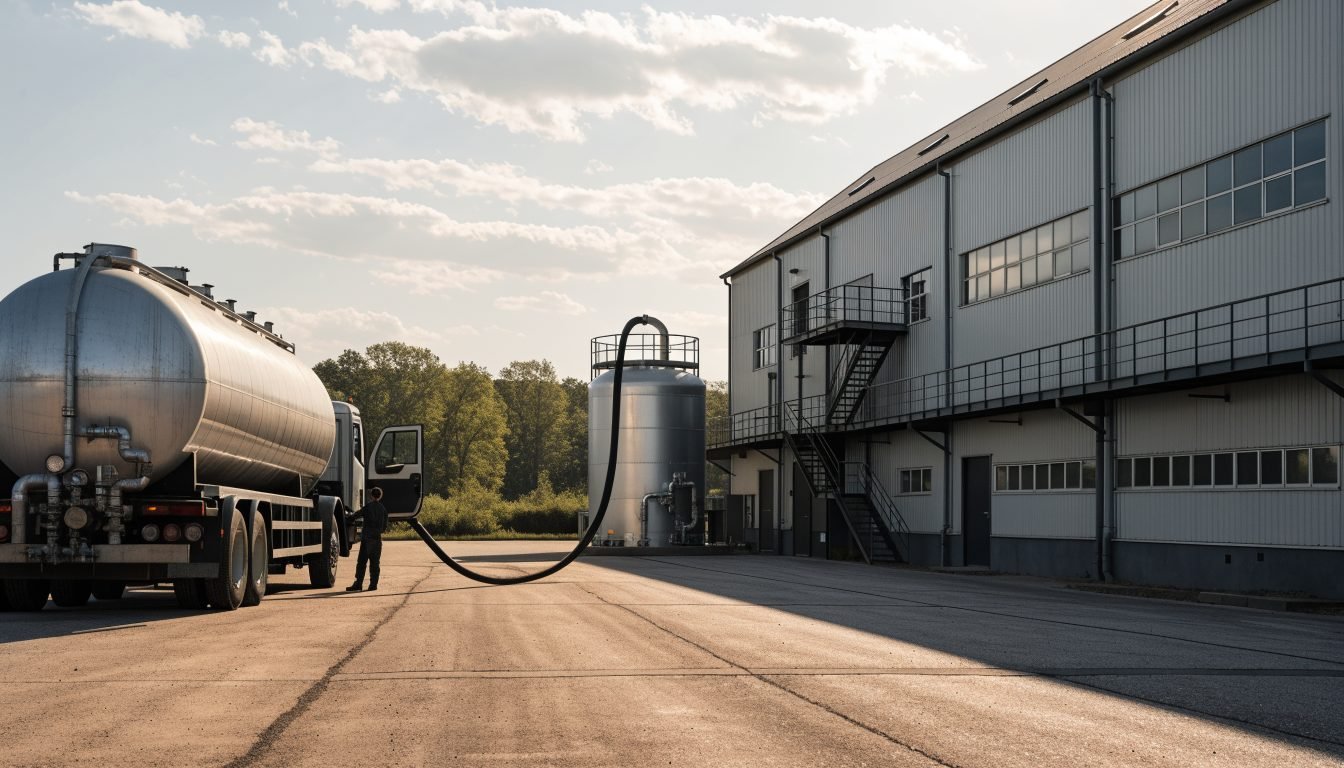
A customer station tank is a cryogenic vessel a gas distributor places at a customer site to supply nitrogen, oxygen, argon, or CO2 on demand. Size it by the customer's average and peak consumption, the delivery route serving the site, the autonomy days you want between deliveries, and whether MicroBulk or bulk storage fits the volume.
For a distributor, tank sizing is a route economics decision as much as a technical one. A tank that is too small forces frequent deliveries and risks run-outs; a tank that is too large ties up capital and space at a site that may not need it.
This guide walks through the inputs that set the right size, how telemetry supports delivery planning, and how KAF Cryogenics supplies both MicroBulk and bulk customer station tanks new or as certified second-hand units.
What is a customer station tank?
A customer station tank is a vacuum-insulated cryogenic tank installed at the end user's premises and refilled by the distributor's delivery vehicle. The customer draws gas through a vaporizer as needed, and the distributor owns the supply relationship and the refill schedule.
Sizing this tank correctly is central to a distributor's cost per delivered unit. The tank size, the customer's consumption, and the delivery route together decide how often a truck must visit and how efficiently the route runs.
- Installed at the customer site and refilled by the distributor
- Feeds a vaporizer that converts liquid to gas for the customer's process
- Sized to balance run-out risk against delivery frequency and capital cost
- Often fitted with telemetry so the distributor sees the fill level remotely
How do you size a customer station tank?
Start from the customer's consumption, then layer in delivery logistics. The tank should hold enough usable gas to cover the days between planned deliveries plus a margin for peak demand, so the customer never runs dry and the truck is not called out ahead of schedule.
- Average daily consumption at the site
- Peak daily demand during the customer's busiest periods
- Delivery frequency the route can support economically
- Autonomy days as a buffer against demand spikes and delivery delays
- Site footprint, access for the delivery vehicle, and any setback distances
- A boil-off allowance so usable volume accounts for a small daily loss
Our cryogenic storage tank sizing guide covers the underlying calculation. For customer stations, weigh the sizing against the route so a single site does not drag down the efficiency of the whole run.
How does the delivery route affect tank size?
A customer station tank is never sized in isolation. The delivery route sets how often a truck can reasonably visit and how much product it can drop at each stop. A site far from the route or on a low-frequency run needs more onsite autonomy, which points to a larger tank.
- Sites on a frequent, nearby route can run smaller tanks with shorter autonomy
- Remote or low-frequency sites need larger tanks to extend autonomy
- Clustered customers let a truck drop at several stops per trip, improving economics
- Peak-season demand may justify sizing above the average to avoid extra call-outs
Balancing tank size against route frequency keeps cost per delivered unit under control and reduces emergency deliveries.
Should you choose MicroBulk or bulk storage?
MicroBulk tanks suit customers whose consumption is above cylinder scale but below full bulk. They replace banks of high-pressure cylinders with a single on-site vessel, cut cylinder handling, and are commonly fitted with telemetry. Bulk storage suits higher, steadier consumption where a large vessel and less frequent deliveries make sense.
- MicroBulk: for customers outgrowing cylinders, with telemetry and reduced handling
- Bulk: for mid to high volume with less frequent, larger deliveries
- Break-even depends on the customer's consumption and delivery logistics
Our guide on MicroBulk versus bulk storage explains the break-even logic in detail. KAF supplies MicroBulk tanks and larger bulk storage tanks, so a distributor can standardize on one supplier across the customer base.
How does telemetry help distributors?
Telemetry reports the tank's fill level to the distributor remotely, so deliveries are scheduled on actual consumption rather than a fixed calendar. This reduces run-outs and avoids topping up a tank that is still mostly full.
- Remote fill-level visibility across the customer base
- Delivery scheduling based on real consumption, not a fixed cycle
- Fewer run-outs and fewer wasted part-fill deliveries
- Data that helps confirm whether a site is correctly sized over time
Telemetry data also validates sizing after installation. If a site is refilled more often than planned, the consumption estimate or the tank size may need revisiting.
What boil-off and pressure factors matter at a customer site?
A customer station tank loses a small amount of product to boil-off every day. Modern stationary cryogenic tanks lose roughly 0.2 to 0.6 percent of contents per day, depending on size and insulation, so build that into the usable-volume calculation rather than treating nameplate capacity as fully available.
Watch for signs of vacuum loss on installed tanks, since a degraded vacuum raises boil-off and shortens the interval between deliveries.
- Frost or sweating on the outer shell
- A rising boil-off rate against the tank's normal behavior
- Faster pressure build than usual
- A vacuum reading is recommended every 6 to 12 months
Pressure class should match the customer's required supply pressure. Our boil-off rate guide explains how to separate a normal rate from a developing problem.
Should distributors buy new or certified used station tanks?
KAF Cryogenics supplies customer station tanks new, built to specification, and as certified second-hand units. A certified used tank is inspected, NDT tested, and vacuum and pressure tested, then sold with a document dossier and written warranty. For a distributor scaling a fleet of station tanks, this channel controls both cost and timeline.
Lead time often decides the approach. New fabrication typically takes months, while a certified used tank held in stock can ship in weeks, which helps when you are onboarding a new customer quickly. KAF also buys used equipment and accepts trade-in against new orders, useful when you retire or resize a station tank.
- New: built to spec for a specific customer requirement
- Certified second-hand: inspected, NDT tested, vacuum and pressure tested, warranty and document file, stock delivery in weeks
- Trade-in: return station tanks against new purchases as your customer base changes
Frequently Asked Questions
How do you size a customer station tank?
Size it to the customer's average and peak consumption, the delivery frequency the route can support, and the autonomy days you want as a buffer. The tank should cover the interval between deliveries with margin for demand spikes. KAF can size a station tank once you share consumption and route details.
What is the difference between MicroBulk and bulk for a customer site?
MicroBulk suits customers who have outgrown cylinders but do not need full bulk, replacing cylinder banks with one on-site tank and telemetry. Bulk suits higher, steadier consumption with larger, less frequent deliveries. The break-even depends on the customer's usage and delivery logistics.
Why does telemetry matter for station tanks?
Telemetry reports the tank fill level to the distributor remotely, so deliveries follow actual consumption instead of a fixed calendar. That reduces run-outs and avoids part-fill deliveries, and the data helps confirm whether a site is correctly sized over time.
How does the delivery route change the right tank size?
Sites on a frequent, nearby route can run smaller tanks with shorter autonomy, while remote or low-frequency sites need larger tanks for more autonomy. Sizing the tank against the route keeps cost per delivered unit low and reduces emergency deliveries.
How much product does a station tank lose to boil-off?
Modern stationary cryogenic tanks lose roughly 0.2 to 0.6 percent of contents per day, depending on size and insulation. Build this into the usable-volume calculation. A rising boil-off rate or frost on the outer shell can indicate vacuum loss and shorter delivery intervals.
Can a distributor buy certified used customer station tanks?
Yes. KAF supplies certified second-hand station tanks that have passed inspection, NDT, and vacuum and pressure testing, with a document dossier and written warranty. Certified used units can ship from stock in weeks, which helps when onboarding a customer quickly.
Can I trade in station tanks as my customer base changes?
Yes. KAF buys used cryogenic equipment and accepts trade-in against new orders. When you retire or resize a customer station tank, its condition and documentation affect the credit it can carry toward a new purchase.
Related reading
Size your customer station tanks with KAF
Tell us your customers' consumption and delivery routes. KAF Cryogenics will help you size MicroBulk or bulk station tanks and supply them new or certified second-hand from stock.
Plan your station tanks