
Liquid Oxygen Tank Safety and Selection (LOX)
How to select a liquid oxygen tank and handle it safely: oxygen cleaning, material compatibility, siting, capacity and pressure.
KAF Cryogenics7 min read
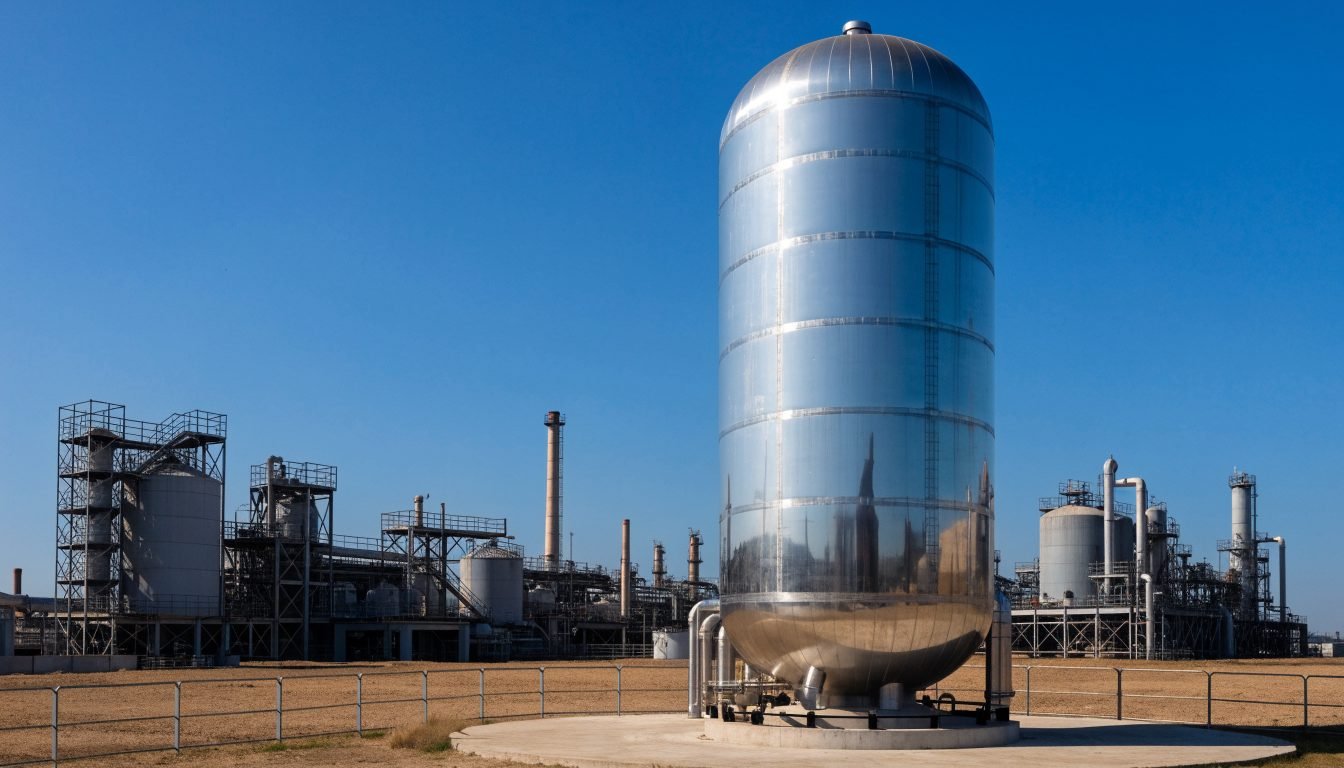
A liquid oxygen tank is a vacuum-insulated vessel that stores LOX at cryogenic temperature for medical, industrial, and process gas supply. Selecting one safely means specifying oxygen-clean construction, oxygen-compatible materials, correct capacity and pressure, and a compliant site layout, then confirming the certification file matches your market.
Oxygen is not flammable itself, but it strongly supports combustion. That single property drives most of the extra requirements a LOX tank carries compared with a nitrogen or argon tank, from cleaning standards to material choices to siting distances.
This guide explains what makes a liquid oxygen tank different, how to select capacity and pressure, and how KAF Cryogenics supplies LOX tanks new or as certified second-hand units with full documentation.
What makes a liquid oxygen tank different?
A liquid oxygen tank shares the double wall, vacuum-insulated design of other cryogenic vessels, but oxygen service adds requirements that nitrogen and argon do not. Oxygen enriches the atmosphere around any leak and accelerates combustion, so the wetted parts must be clean, the materials must be compatible with oxygen, and the installation must keep ignition sources at a safe distance.
- Oxygen-clean internal surfaces free of oils, greases, and particulate
- Materials selected for oxygen compatibility on wetted parts
- Siting that respects setback distances from ignition sources and combustibles
- Relief devices and valves rated for oxygen service
- Signage and access control appropriate to an oxygen-enriched area
None of this makes oxygen unusually dangerous when handled correctly. It simply means a LOX tank is specified and installed to a tighter set of rules than an inert-gas tank.
Why does oxygen cleaning matter?
Oxygen cleaning removes hydrocarbons, oils, greases, and particles from every surface that contacts oxygen. In an oxygen-enriched environment these contaminants can ignite far more readily than in normal air, so cleaning is a safety requirement, not a cosmetic step.
For a liquid oxygen tank, oxygen cleaning covers the inner vessel, piping, valves, and any component in the liquid or gas path. When you buy a LOX tank, confirm the wetted parts were cleaned for oxygen service and that any component replaced during refurbishment was cleaned to the same standard.
- Clean all wetted surfaces of oil, grease, and hydrocarbon residue
- Keep cleaned components sealed until installation to prevent recontamination
- Use lubricants and sealants approved for oxygen service only
- Re-clean any part opened or replaced during service or refurbishment
Which materials are compatible with liquid oxygen?
Material selection for oxygen service focuses on the wetted parts, the surfaces the oxygen actually touches. These parts must resist reaction with oxygen and remain safe at cryogenic temperature. Low-temperature service also requires impact testing of metals to avoid brittle fracture below about -150 C, which is why material certificates matter.
- Wetted metals chosen for oxygen compatibility and low-temperature toughness
- Charpy V-notch impact testing on materials rated for cryogenic service
- Gaskets, seals, and lubricants approved specifically for oxygen use
- Documented material certificates in the tank file
Ask for the material and impact test records as part of the certification file. For an overview of the papers a cryogenic tank should carry, see our guide on cryogenic tank certifications.
How do you site a liquid oxygen tank safely?
A LOX tank is installed with setback distances that separate it from ignition sources, combustible materials, and occupied areas. The exact distances depend on tank size and the code or authority governing your site, so the layout should follow the applicable local regulation rather than a generic rule.
- Keep the tank clear of oils, fuels, and other combustibles on the ground nearby
- Maintain separation from ignition sources and, where required, from property boundaries and buildings
- Provide a non-combustible base and good ventilation so any vented oxygen disperses
- Ensure truck access for filling without crossing hazard zones
- Post oxygen signage and keep the area free of grease and organic debris
Confirm the required distances with the authority that applies to your location before finalizing the pad and pipework. Correct siting is straightforward when planned early and costly to correct after installation.
How do you size a liquid oxygen tank?
Capacity follows the same logic as any cryogenic tank: match usable volume to your consumption and delivery schedule, with margin for peak demand. A tank should hold enough oxygen to cover the days between deliveries plus a buffer, so supply never runs short.
- Average and peak daily oxygen consumption
- Delivery frequency your supplier can commit to
- Autonomy days you want between deliveries
- Footprint and the setback distances your site allows
- A boil-off allowance in the usable volume
Our cryogenic storage tank sizing guide covers the method step by step. KAF can size a LOX tank to your demand once you share consumption and delivery details.
What pressure class and boil-off should you expect?
Pressure class sets the delivery pressure to your process and affects how the tank manages boil-off between draws. Choose the class from the supply pressure your equipment needs rather than defaulting high, since an over-specified pressure adds cost without benefit.
For boil-off, modern stationary cryogenic tanks lose roughly 0.2 to 0.6 percent of contents per day, depending on size and insulation. Watch for warning signs of vacuum loss, which are the same across cryogenic liquids.
- Frost or sweating on the outer shell
- A rising boil-off rate compared with the tank's normal behavior
- Faster pressure build than usual
- A vacuum reading is recommended every 6 to 12 months
Should you buy a new or certified used LOX tank?
KAF Cryogenics supplies liquid oxygen tanks new, built to your specification, and as certified second-hand units. A certified used LOX tank is inspected, NDT tested, and vacuum and pressure tested, then sold with a document dossier and written warranty. For oxygen service, any wetted component touched during refurbishment is cleaned for oxygen use.
Lead time is often the deciding factor. New fabrication typically takes months, while a certified used tank from stock can ship in weeks. KAF also buys used equipment and accepts trade-in against new orders.
- New: built to spec with the certification code your market requires
- Certified second-hand: inspected, NDT tested, vacuum and pressure tested, oxygen-cleaned wetted parts, warranty and document file
- Certification matched to market: PED 2014/68/EU for Europe, ASME Section VIII where the US code applies
A related buyer's guide for inert-gas storage is our liquid nitrogen storage tank guide, which shares much of the sizing and documentation logic.
Frequently Asked Questions
Is a liquid oxygen tank dangerous?
Oxygen is not flammable itself, but it strongly supports combustion, so a LOX tank is handled with tighter rules than an inert-gas tank. When the tank is oxygen-clean, built with compatible materials, and sited with correct setback distances, it operates safely. The extra requirements manage the risk rather than signal an unusual hazard.
What is oxygen cleaning and why is it required?
Oxygen cleaning removes oils, greases, and particles from every surface that contacts oxygen. In an oxygen-enriched environment these contaminants ignite more easily, so cleaning is a safety requirement for all wetted parts. Any component replaced during service must be cleaned to the same standard.
What materials are used for liquid oxygen service?
Wetted parts are chosen for oxygen compatibility and for toughness at cryogenic temperature. Metals for low-temperature service undergo Charpy V-notch impact testing to avoid brittle fracture, and seals and lubricants must be approved for oxygen use. Material certificates should be part of the tank file.
How far must a liquid oxygen tank be from buildings?
Setback distances depend on tank size and the local code or authority governing the site, so there is no single universal figure. Keep the tank clear of combustibles and ignition sources and confirm the required distances with the applicable authority before fixing the layout.
What boil-off rate is normal for a LOX tank?
Modern stationary cryogenic tanks lose roughly 0.2 to 0.6 percent of contents per day, depending on size and insulation. A rising rate, frost on the outer shell, or faster pressure build can indicate vacuum loss. A vacuum reading is recommended every 6 to 12 months.
Can I buy a certified used liquid oxygen tank?
Yes. KAF sells certified second-hand LOX tanks that have passed inspection, NDT, and vacuum and pressure testing, with a document dossier and written warranty. Wetted parts touched during refurbishment are cleaned for oxygen service. Certified used units can ship from stock in weeks.
Which certification does a liquid oxygen tank need?
It depends on the destination market. PED 2014/68/EU applies in Europe with CE marking, while ASME Section VIII is required where the US code is specified. The correct code reflects where the tank operates, not its quality.
Related reading
Select a liquid oxygen tank the right way
Share your consumption, pressure, and site constraints. KAF Cryogenics will propose a new or certified second-hand LOX tank with oxygen-clean construction and full documentation.
Talk to KAF