
Cryogenic Tank Maintenance Schedule and Vacuum Checks
A practical cryogenic tank maintenance schedule: relief valve checks, a vacuum reading every 6 to 12 months, gauge and valve inspection.
KAF Cryogenics8 min read
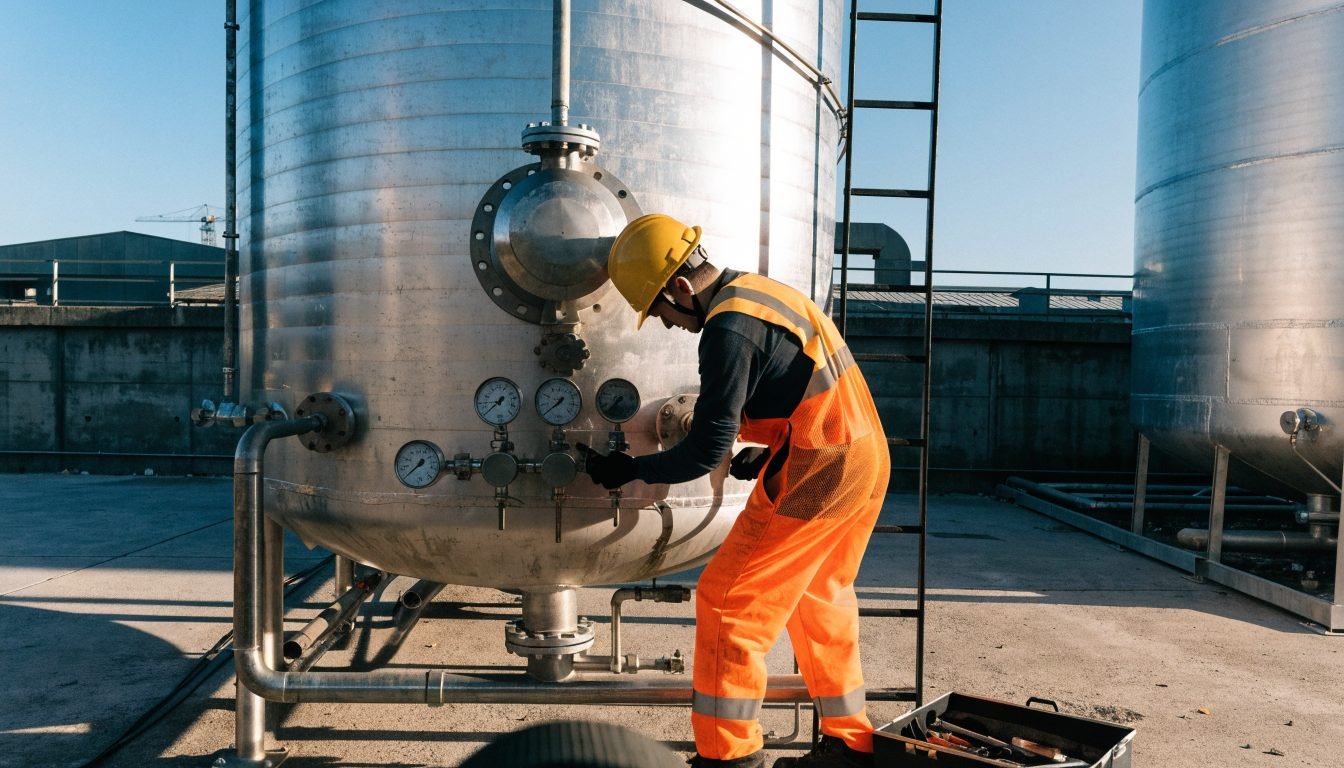
A cryogenic tank maintenance schedule keeps a vacuum-insulated vessel safe and efficient through routine tasks: daily gauge and level checks, periodic valve and relief-device inspection, and a vacuum reading every 6 to 12 months. Most daily checks are operator work, while vacuum measurement and repairs need a qualified specialist.
Cryogenic tanks are built to run for years with little intervention, but low temperature and constant pressure cycling mean that valves, gauges and insulation still need attention. A simple, written routine catches a weakening vacuum or a sticking relief valve early, before it turns into higher boil-off, faster pressure rise, or a safety concern.
This guide sets out a maintenance schedule by interval, explains what an operator can safely do versus what a specialist should handle, and shows why the vacuum check is the single most valuable periodic task.
Why does a cryogenic tank need a maintenance schedule?
A cryogenic tank stores a liquefied gas far below ambient temperature inside a vacuum-insulated jacket. The vacuum is what keeps heat out, so boil-off stays low and pressure stays predictable. That vacuum, along with the valves and safety devices around it, does not last forever without checks.
A written maintenance schedule does three things for an operator:
- It confirms safety devices work, so the tank is always protected against overpressure
- It catches a weakening vacuum before boil-off and pressure climb noticeably
- It builds a baseline record, so any change stands out against the tank's own history
Without a routine, the first sign of trouble is often external frost or frequent venting, by which point the problem has already grown. Regular checks turn maintenance from reactive to planned.
What are the daily and weekly checks an operator can do?
The most frequent checks are simple, visual, and safe for a trained site operator. They need no special tools and take only minutes, but they form the front line of tank monitoring.
- Read and log tank pressure and liquid level at the same time each day
- Check the outer shell for frost, sweating or condensation, which should not be present on a healthy tank
- Note whether the tank is venting and how often, comparing against normal
- Look and listen for gas leaks at valves, fittings and connections
- Confirm the area around the tank is clear, dry and free of ice buildup
Logging these values is as important as taking them. A single reading means little, but a trend of rising pressure, falling level while idle, or new frost is a clear early warning that something has changed.
What should be checked monthly and quarterly?
At longer intervals the checks become more thorough, covering the valves, gauges and instruments that control pressure and delivery. These remain within the reach of a competent operator or site maintenance team.
- Inspect pressure-building and economizer regulators for correct setpoints and smooth operation
- Verify pressure gauges and level indicators against expected readings
- Check manual valves for smooth operation and tight shutoff
- Examine external piping, supports and the outer shell for damage or corrosion
- Confirm labels, signage and safety markings are legible
Anything that reads out of range, sticks, or leaks should be tagged and referred to a specialist rather than forced. Cryogenic valves and regulators are precision components, and low-temperature service leaves no room for improvisation.
How often should a cryogenic tank vacuum be checked?
A vacuum reading is recommended every 6 to 12 months. This is the single most valuable periodic maintenance task, because the vacuum in the jacket is what controls heat ingress, boil-off and pressure behavior. A weakening vacuum is the most common hidden cause of rising running costs on a cryogenic tank.
The vacuum is measured through a dedicated port on the tank using specialist instrumentation. A reading within the expected range confirms the insulation is sound. A reading that has drifted signals that heat ingress is climbing, and that boil-off, which normally sits around 0.2 to 0.6 percent of contents per day for a modern stationary tank, may be heading above the tank's baseline.
Because this check needs the right gauge and trained interpretation, it is specialist work. Booking it on a fixed 6 to 12 month cycle, rather than waiting for symptoms, is what makes it valuable. Catching a slow vacuum decline early can mean a straightforward re-evacuation instead of a failed insulation and a tank out of service.
How often should relief valves and safety devices be inspected?
Relief valves and safety devices are the tank's protection against overpressure, so they sit near the top of any maintenance schedule. Their function must be confirmed regularly, and they should be serviced or replaced on a planned interval rather than run to failure.
- Confirm relief valves are the correct rating for the tank and free of frost, corrosion or blockage
- Check that isolation valves ahead of dual relief devices are in the correct position
- Verify burst discs and vent lines are clear and correctly oriented
- Follow the manufacturer's and local regulatory intervals for relief-valve testing or replacement
Relief-valve testing and recertification is specialist work and is often governed by local pressure-equipment rules. Operators should confirm devices are present, correct and unobstructed, but leave testing, resetting and replacement to qualified personnel.
What maintenance needs a specialist rather than an operator?
Drawing a clear line between operator tasks and specialist tasks keeps a site both safe and compliant. Operators own the routine, visual and logging work. Specialists own anything involving the pressure envelope, the vacuum, or safety-device certification.
Operator tasks
- Daily pressure and level logging
- Visual checks for frost, leaks and external damage
- Monitoring venting frequency and consumption against baseline
- Keeping the site clear and reporting anything out of range
Specialist tasks
- Vacuum reading and re-evacuation of the jacket
- Relief-valve testing, recertification and replacement
- Regulator overhaul and internal valve repair
- Non-destructive testing (NDT) and any work on the pressure envelope
- Periodic statutory inspection where required for the vessel or, for transport tanks, ADR inspection
When a specialist visit is due, combining tasks is efficient: a single service can take the vacuum reading, inspect relief devices, and check regulators in one planned stop.
What does a full cryogenic tank maintenance schedule look like?
Bringing the intervals together gives a practical routine that most sites can adopt. Adjust the frequency to the manufacturer's manual, the gas stored, and local regulations, which always take precedence.
- Daily: log pressure and level, check for frost and leaks, note venting
- Weekly: confirm site is clear, review the daily log for trends
- Monthly to quarterly: check regulators, gauges, manual valves, piping and supports
- Every 6 to 12 months: specialist vacuum reading, relief-device inspection, regulator check
- Per regulation and manufacturer: relief-valve recertification, statutory vessel inspection, ADR inspection for transport tanks
The value of the schedule is in the record it builds. A logged history lets you see a slow vacuum decline or a creeping rise in boil-off long before it forces the tank out of service, and it supports the tank's document dossier if you ever sell or trade it in.
How does KAF Cryogenics support tank maintenance and testing?
KAF Cryogenics is an Istanbul-based manufacturer and trader of cryogenic and pressurized gas equipment. On its certified second-hand tanks, the vacuum is measured and the vessel is inspected, NDT tested, and pressure tested, then sold with a document dossier and a written warranty. A buyer therefore starts with a documented insulation and pressure condition rather than an unknown.
For operators, that same testing capability, covering NDT, vacuum and pressure, is the specialist backing a maintenance schedule depends on. Whether you run a new tank built to specification or a certified second-hand unit, keeping to the routine above, with a vacuum reading every 6 to 12 months, is the practical way to protect performance and safety over the tank's life.
Frequently Asked Questions
How often should a cryogenic tank vacuum be checked?
A vacuum reading is recommended every 6 to 12 months. It is the most valuable periodic task because the vacuum controls heat ingress, boil-off and pressure. The reading is taken through a dedicated port with specialist instrumentation, so it is specialist work rather than an operator task.
What cryogenic tank maintenance can an operator do without a specialist?
Operators can log daily pressure and level, check the outer shell for frost or leaks, monitor venting frequency, and inspect gauges and manual valves for normal operation. Anything involving the vacuum jacket, relief-valve testing, or the pressure envelope should be left to a qualified specialist.
How often should cryogenic relief valves be tested?
Relief valves should be inspected regularly for correct rating and freedom from frost or blockage, and tested or replaced on the interval set by the manufacturer and local pressure-equipment regulations. Testing, resetting and recertification are specialist tasks, not operator tasks.
What is the most important cryogenic tank maintenance task?
The periodic vacuum reading, taken every 6 to 12 months, is the most valuable task. The vacuum controls heat ingress, so a slow decline raises boil-off and pressure. Catching it early can mean a simple re-evacuation instead of failed insulation and a tank out of service.
Why should I log daily pressure and level readings?
A single reading means little, but a logged trend reveals change. Rising pressure, faster level loss while idle, or new external frost all stand out against the tank's own baseline. The log also supports the document dossier if you later sell or trade in the tank.
What are the signs a cryogenic tank needs specialist attention?
Frost or sweating on the outer shell, venting more often than normal, faster pressure build, or boil-off above the tank's baseline all point to a possible vacuum issue. Any sticking valve, out-of-range gauge, or relief-device concern should also go to a specialist.
Does a certified second-hand tank still need a maintenance schedule?
Yes. Certification and testing confirm the tank's condition at handover, but ongoing service is still required. Every tank benefits from the same routine of daily checks, periodic valve inspection, and a vacuum reading every 6 to 12 months to keep performance and safety through its working life.
Related reading
Need a tested tank or a maintenance baseline?
KAF Cryogenics tests vacuum and pressure on every certified second-hand tank and delivers new units built to specification with a full document dossier. Tell us your gas, capacity and site conditions for an accurate quote and testing support.
Contact KAF Cryogenics