
Cryogenic Tank Installation: Siting, Foundation and Clearance Requirements
Cryogenic tank installation requirements: foundation loads, separation distances, tanker access, ventilation and earthing. Plan the site before delivery.
KAF Cryogenics8 min read
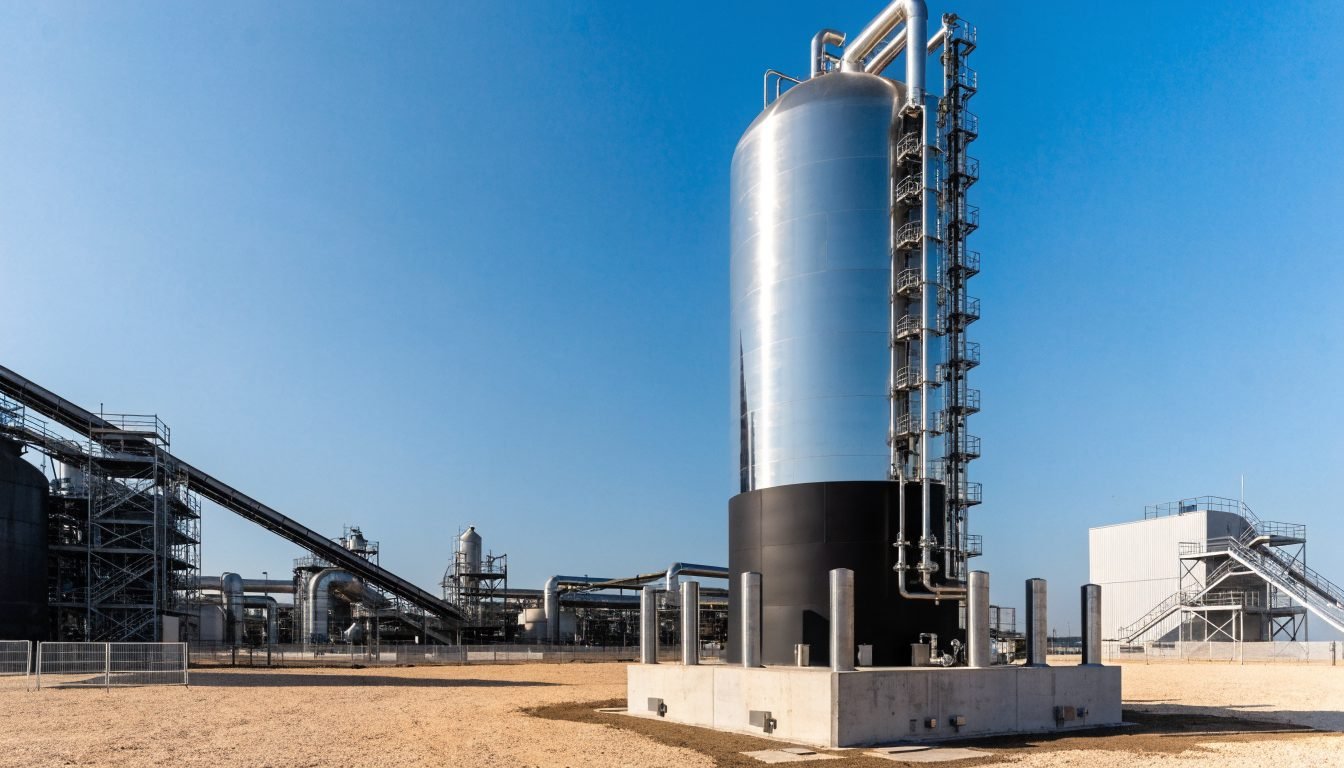
Cryogenic tank installation requirements cover a load bearing concrete foundation, separation distances from buildings, boundaries and ignition sources, tanker access for filling, ventilation where the area is enclosed, and electrical earthing. Exact distances are set by national regulation and the applicable standard, so confirm them locally before you pour concrete.
Most delays on a cryogenic tank project are not caused by the tank. They are caused by a site that is not ready: a pad poured to the wrong dimensions, a gate the delivery tanker cannot reach, or a clearance the local authority will not accept.
This guide sets out what to prepare before the tank arrives, and what information KAF Cryogenics provides so your civil and electrical contractors can design the site correctly the first time.
What are the main cryogenic tank installation requirements?
A cryogenic storage tank is a heavy, vacuum insulated pressure vessel that is filled by road tanker and connected to a vaporizer and process pipework. The installation therefore has a civil element, a layout element and an electrical element, and each has to be resolved before delivery.
- Foundation sized for the full operating weight of the tank, including seismic and wind loading
- Separation distances from buildings, boundaries, occupied areas and ignition sources, as required by the regulation applying to your site
- A route and standing area the delivery tanker can use safely, including turning space
- Ventilation where the tank or its vent discharge is in an enclosed or partly enclosed area
- Containment or a defined spill surface where the product and local rules require it
- Earthing and bonding of the tank, pipework and filling point
- Signage, access control and protection against vehicle impact
Sizing comes first, because capacity and pressure class determine weight, footprint and connection layout. If capacity is still open, our guide on how to size a cryogenic storage tank explains the method before you commit to a civil design.
What foundation does a cryogenic storage tank need?
A vertical cryogenic tank concentrates a large load on a small footprint. The foundation is normally a reinforced concrete pad or ring beam designed by a civil engineer using the loads the manufacturer supplies. It is not a generic slab, and it should not be poured before the equipment drawing is issued.
- Empty weight, full operating weight and test weight, since a hydrostatic test load can exceed the operating load
- Base plate or leg arrangement, bolt hole pattern and anchor bolt sizes
- Overall height and diameter for wind loading and lifting clearance
- Nozzle and connection positions, so pipework and cable routes are not blocked by the pad
The pad must be level within the tolerance stated in the installation manual and fully cured before the lift. Ground conditions, frost depth and seismic classification are decided by the engineer of record for the site, not by the tank supplier. Horizontal tanks spread their load over saddles and often suit weaker ground or a height restriction, as our comparison of vertical and horizontal cryogenic tanks explains.
How are separation distances and clearances determined?
There is no single universal separation distance for a cryogenic tank. Required clearance to buildings, boundaries, ignition sources, doors and air intakes is set by the national regulation applying at the installation site and by the standard the installation is designed to. It varies with the product stored, the capacity and what sits next to the tank.
The correct process is therefore to establish the applicable rule set first, then design the layout, rather than copying a figure from another site or another country.
- Identify the regulation and standard governing the site, and the authority that will approve it
- Confirm the product classification, since oxygen, inert gases and flammable products such as LNG and LPG are treated differently
- Establish clearances to occupied buildings, boundaries and public access routes
- Establish clearances to ignition sources, electrical equipment, drains, pits and below grade openings
- Check where vent and relief discharges may terminate and what must be kept clear of them
- Confirm the requirement in writing with the approving authority before finalising the layout
Two product specific points are worth flagging early. Oxygen enriches the atmosphere around any leak or vent, so combustibles, oils and ignition sources are kept away from the tank area. LNG and LPG bring their own hazardous area classification. Neither replaces the local requirement. If your project involves several vessels, our guide to tank farm layout covers grouping and expansion space.
What access does the delivery tanker need?
A stationary tank is refilled by a semi trailer or bobtail that must reach the fill point, stand safely during transfer and leave again. Access is the requirement most often discovered too late, because the pad gets designed around the tank rather than around the vehicle.
- Gate width, internal road width and turning circle for an articulated vehicle
- Ground bearing capacity along the delivery route and at the standing position
- Overhead clearance, including cables, canopies and pipe bridges
- Distance from the tanker standing point to the fill connection, matched to the hose length carried
- A standing position that does not block emergency access during transfer
- Wheel chocks, bollards or barriers where impact protection is required
Ask your gas supplier which vehicle will serve the site and design the access around that vehicle.
When is ventilation required for indoor or enclosed areas?
Cryogenic tanks are normally installed outdoors. The reason is straightforward: nitrogen and argon are colourless and odourless, and a small volume of liquid produces a large volume of gas, so in an enclosed space a vent or leak can displace oxygen with no warning to people nearby. Outdoor siting lets that gas disperse.
- Ventilation sized for the enclosed volume and the credible release, designed by a ventilation engineer
- Oxygen monitoring with alarms where personnel can enter an area that may become oxygen deficient
- Vent and relief lines routed to a safe outdoor location away from doors, windows and air intakes
- No low points, pits or trenches where cold, dense vapour can collect
- Entry procedures and signage for any space classified as a confined space
The underlying hazard is explained in our article on oxygen deficiency and enrichment in cryogenic service. Anyone specifying an indoor or partly enclosed installation should read it before finalising the layout.
What containment, earthing and instrumentation is needed?
Cryogenic liquids evaporate rapidly rather than pooling like a fuel spill, so containment philosophy differs from an oil tank farm. Some products and some jurisdictions still require a defined spill area or drainage arrangement, and LNG and LPG installations are treated under their own rules. Confirm this with the same authority that sets your separation distances.
- A non combustible surface under and around the tank, kept free of oil, grease and vegetation
- Ground surface and drainage designed so cryogenic liquid cannot run into drains, pits or basements
- Protection of concrete and adjacent structures from cold embrittlement caused by spillage
- Earthing of the tank structure and bonding between tank, pipework and the tanker earthing point
- Lightning protection where the site risk assessment requires it
- Equipment rated for the hazardous area classification where LNG or LPG is stored
- Power and signal cabling for level and pressure instrumentation, plus lighting at the fill point
If you intend to add remote level monitoring, run the cabling during installation rather than retrofitting later. Our article on cryogenic tank telemetry explains what the system measures and what to check on an existing tank.
What does KAF Cryogenics provide for site design?
KAF Cryogenics supplies the equipment and the technical information your designers need. We do not replace the local engineer or the approving authority, and we do not state separation distances as universal law, because those are set where the tank is installed.
- General arrangement and foundation drawings with dimensions and anchor details
- Empty, operating and test weights for the civil design
- Nozzle schedule, connection sizes and orientations for the pipework designer
- Design pressure, design temperature and service fluid data
- The vessel certification file: PED 2014/68/EU or ASME as applicable, with EN 13458 for static vacuum insulated vessels
- Installation, commissioning and operating documentation
Both supply channels carry the same documentation. A new tank is built to your specification, and a certified second hand tank is inspected, NDT tested, vacuum and pressure tested, and sold with a document dossier and written warranty. Where the schedule is tight, a certified used unit can ship from stock in weeks instead of the months a new fabrication normally takes, which often decides whether the civil programme or the equipment is the critical path.
Once the tank is on its foundation, the next step is purging, cooldown and first fill, covered in our commissioning guide.
Frequently Asked Questions
How far must a cryogenic tank be from a building?
There is no single universal figure. Separation distances are set by the national regulation applying at the site and by the standard the installation is designed to, and they vary with the product stored and the tank capacity. Confirm the distances with the approving authority before fixing the layout.
What foundation does a cryogenic storage tank need?
Normally a reinforced concrete pad or ring beam designed by a civil engineer using the manufacturer's load data. The design must cover empty, full operating and test weights plus wind and seismic loading. The pad must be level within the tolerance in the installation manual and fully cured before the lift.
Can a cryogenic tank be installed indoors?
Cryogenic tanks are normally sited outdoors so vented gas disperses. Where any part of the installation is enclosed, the design must include ventilation sized for the space, oxygen monitoring with alarms, and vent lines routed to a safe outdoor location. Confined space procedures apply to areas personnel can enter.
What access does the filling tanker need?
The delivery vehicle needs adequate gate and road width, turning space, overhead clearance and ground bearing capacity, plus a standing position within hose reach of the fill point. Ask your gas supplier which vehicle will serve the site and design the access around that vehicle rather than around the tank alone.
Does a cryogenic tank need earthing?
Yes. The tank, its pipework and the tanker filling point are bonded and earthed so static charge cannot accumulate during transfer. Where LNG or LPG is stored, electrical equipment in the classified area must also suit the hazardous area classification, and lightning protection is added where the site risk assessment requires it.
What information does KAF provide for the site design?
KAF supplies general arrangement and foundation drawings, empty, operating and test weights, the nozzle and connection schedule, design pressure and temperature data, and the vessel certification file. Local separation distances and approvals remain with the site engineer and the authority.
Related reading
Get the drawings your site designers need
Tell us the product, capacity and pressure you need. KAF Cryogenics will send equipment drawings, weights and connection details for your foundation and layout design, and quote the tank new or as a certified second hand unit.
Request equipment data