
Equipment Checklist for an LNG Satellite Station
The complete LNG satellite station equipment checklist: storage tank, ambient vaporizers, pressure control, odorization, metering and safety. Plan your build.
KAF Cryogenics7 min read
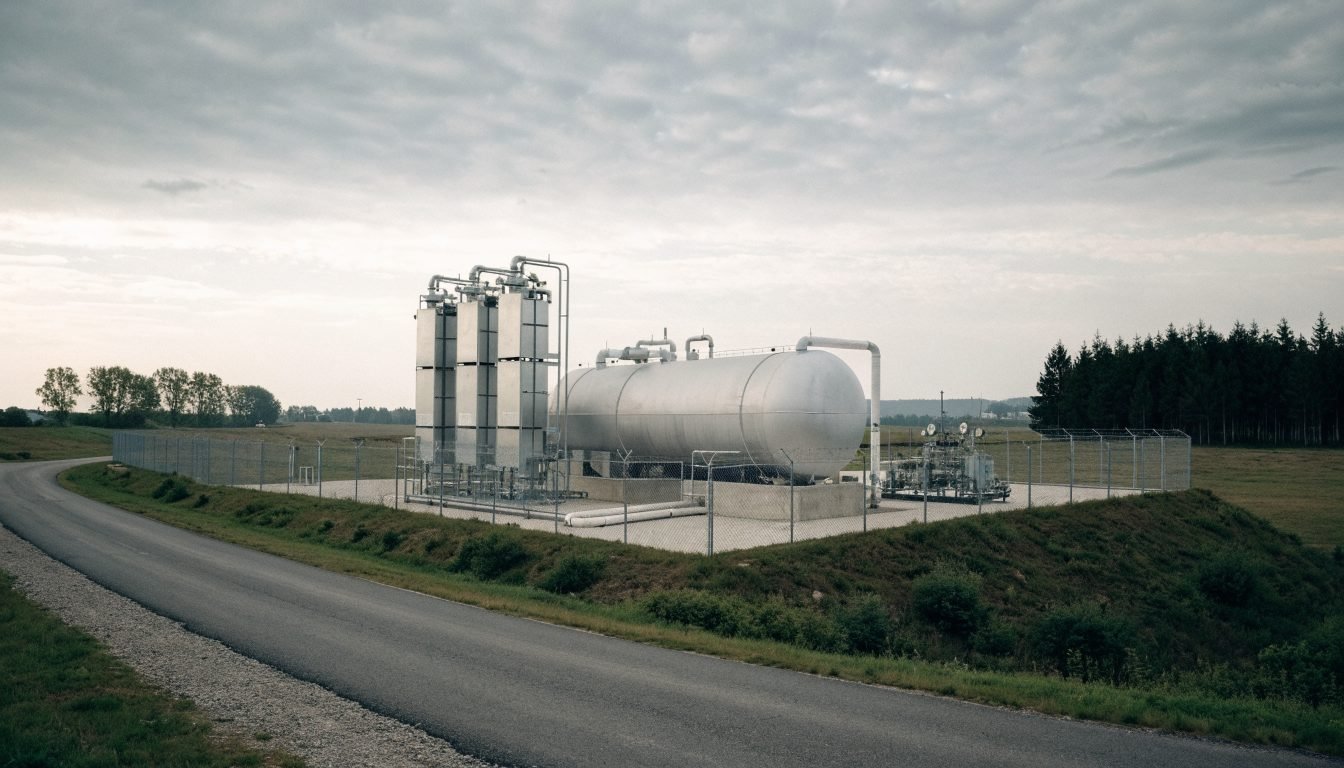
An LNG satellite station needs a cryogenic LNG storage tank, one or more ambient air vaporizers, a pressure control and regulation skid, odorization, metering, and a safety and gas detection system. Together these turn delivered liquid into odorized, pressure controlled gas ready for the local network or an industrial user.
This checklist walks through each item, what it does, and the questions to answer before you buy. A satellite station is a long term investment, so the sizing and specification choices you make now set the operating cost for years. The order below follows the path the gas takes, from stored liquid to metered send out.
KAF Cryogenics supplies the LNG storage tank and ambient vaporizers at the core of a satellite station, built new to specification or delivered as certified second hand from stock. This lets a distributor match the equipment to real demand rather than to whatever a single catalogue offers.
What is an LNG satellite station?
An LNG satellite station is a local facility that receives liquefied natural gas by road tanker, stores it cold, and vaporizes it into pipeline quality gas for a town network, a factory, or a cluster of industrial users. It is called a satellite because it sits away from the main gas grid and is fed by delivery rather than by a pipeline connection.
The station holds LNG at cryogenic temperature, near minus 162 degrees Celsius, then adds heat through a vaporizer to return it to gas. Because the station runs on scheduled deliveries, storage volume and vaporization capacity have to be sized to the demand profile and the delivery interval together.
What equipment does an LNG satellite station need?
A working satellite station is a small chain of equipment, each stage handing the gas to the next. The core list is short, but each item has to match the others in capacity and pressure.
- LNG cryogenic storage tank, vacuum insulated, sized to demand and delivery frequency
- Ambient air vaporizers to convert liquid LNG to gas using heat from the surrounding air
- Pressure control and regulation skid to hold a stable send out pressure
- Odorization unit to add the warning smell required for distribution gas
- Metering to measure gas delivered to the network or customer
- Safety and gas detection system, relief devices, and emergency shutdown
- Interconnecting cryogenic and gas piping, valves, and a control panel
How do you size the LNG storage tank?
Tank size follows daily gas demand and how often a tanker can deliver. Multiply average daily consumption by the number of days of autonomy you want between deliveries, then add margin for peak demand and a working reserve. A site that wants weekly deliveries needs far more storage than one that can take a tanker every two days.
Boil off matters too. Modern stationary cryogenic tanks lose roughly 0.2 to 0.6 percent of contents per day to static evaporation, depending on size and insulation quality. Larger tanks have a lower percentage loss because the surface area to volume ratio improves. Size for demand plus a buffer rather than for the minimum that just covers a single delivery cycle.
Pressure class and MAWP
The tank pressure class sets the send out pressure available without extra pumping and affects how boil off is managed. Choose the maximum allowable working pressure with the vaporizer duty and network pressure in mind, so the station delivers a steady pressure across the delivery cycle.
How many ambient air vaporizers do you need?
Ambient air vaporizers use heat from the surrounding air to turn cold liquid into gas, with no fuel or power input for the heat itself. Sizing depends on peak gas flow, the gas type, ambient temperature, and the defrost cycle. Over time frost builds on the fins and reduces heat transfer, so a station usually runs vaporizers in parallel and rotates duty to let one defrost while another carries the load.
- Size for peak send out flow, not average, so the station holds pressure on the coldest, highest demand day
- Oversize or add units in cold climates where ambient heat is scarce and frosting is faster
- Plan a duty and standby arrangement so defrost never stops send out
- Confirm the vaporizer material is rated for cryogenic service
What about pressure control, odorization and metering?
After vaporization the gas passes through a pressure regulation skid that drops and holds it at the network or customer pressure. Stable regulation protects downstream equipment and keeps supply consistent as tank pressure changes through the delivery cycle.
Odorization adds the distinctive warning smell that lets people detect a leak, and it is required for gas sent to a distribution network. Metering records the volume delivered, which the station operator needs for billing and reconciliation. These stages are smaller than the tank and vaporizers, but skipping or undersizing them creates operating and compliance problems.
What safety systems are required?
Safety runs through the whole station rather than sitting in one box. Pressure relief devices protect the tank and piping, gas detection watches for leaks, and an emergency shutdown system can isolate the station quickly. Siting, spacing, and fire protection follow the applicable local codes for the destination market.
- Pressure relief valves and rupture discs sized to the vessel
- Fixed gas detection with alarm and shutdown links
- Emergency shutdown valves and a clear isolation sequence
- Signage, access control, and a documented operating procedure
Should you buy new or certified second hand equipment?
The tank and vaporizers can be bought new, built to your specification, or as certified second hand units from stock. New fabrication of a cryogenic tank commonly takes months. Certified second hand equipment that KAF holds in stock can ship in weeks, which shortens the whole project timeline when a station has to come online on a set date.
Certified second hand does not mean unchecked. KAF inspects each used unit, performs non destructive testing, or NDT, and vacuum and pressure testing, then sells it with a document dossier and a written warranty. For a satellite station, that combination lets you compare a stock unit against a new build on lead time and total cost, not on guesswork.
What certifications should the equipment carry?
The pressure vessel code depends on the destination market. PED 2014/68/EU applies for CE marking in Europe, while ASME Section VIII is the United States code. Static cryogenic vessels follow EN 13458. Ask for the full certification file so the equipment matches the market where the station is built and operated.
Low temperature service also requires impact, or Charpy V notch, testing of the materials to avoid brittle fracture below about minus 150 degrees Celsius. KAF builds to PED and ASME and holds ISO 9001, ISO 14001, and ISO 3834-2 for welding quality, and supplies the supporting documents with the equipment.
Frequently Asked Questions
What is the core equipment in an LNG satellite station?
The core equipment is a cryogenic LNG storage tank, ambient air vaporizers, a pressure control skid, an odorization unit, metering, and a safety and gas detection system. The tank and vaporizers are the largest items and set the sizing for everything else.
How is the LNG storage tank sized?
Size the tank from average daily gas demand multiplied by the days of autonomy you want between tanker deliveries, plus margin for peak demand and a reserve. Delivery frequency is the main driver: less frequent deliveries need larger storage.
Why does a satellite station use ambient air vaporizers?
Ambient air vaporizers draw heat from the surrounding air to turn liquid LNG into gas without fuel or electric heat input. They are simple and low cost to run, though they frost over in use and are usually installed in parallel so one can defrost while another carries the load.
What is the boil off rate for LNG storage tanks?
Modern stationary cryogenic tanks lose roughly 0.2 to 0.6 percent of contents per day to static evaporation, depending on size and insulation. Larger tanks show a lower percentage loss because their surface area to volume ratio is better.
Can I buy the equipment second hand to save time?
Yes. Certified second hand tanks and vaporizers that KAF holds in stock can ship in weeks, against months for new fabrication. Each used unit is inspected, NDT tested, vacuum and pressure tested, and sold with a document dossier and written warranty.
What certifications should the station equipment have?
Use PED 2014/68/EU for the European market or ASME Section VIII for the United States market, with EN 13458 for static cryogenic vessels. The correct code depends on the destination market, and low temperature materials need Charpy impact testing.
Related reading
Planning an LNG satellite station?
Tell KAF Cryogenics your gas demand and delivery interval, and we will help size the storage tank and vaporizers and quote both a new build and a certified second hand option from stock.
Request a quote